

For the past month and a half, I've been living in a hotel way out in California for work. And one of the perks of living in this particular hotel (besides free breakfast seven days a week, free dinner four days a week, racking up Hilton points and people making my bed and giving me fresh towels) is that I get the USA Today delivered at my doorstep. I don't read the paper much anymore, I get most of the things I need online, and the USA Today is to news as McDonalds is to meals, but it's just nice to have something delivered every morning on your doorstep, as if I was living in a true home or something.
Or at least it was. I got up early this morning because I'd fallen asleep before I could do my laundry. I'm walking out with my bag of clothes and look down to see the USA Today at the foot of my door, like it always is. The headline is something about tainted cafeteria lunches in our schools, alarmist no doubt, but something I might look at later. On the top left corner there's a small headline about Sunday nights, Colts-Patriots games that made me do a double-take- "Colt's D Felt Disrespected By Play-Call!" What!!!
If you're not a sports fan, what they're refering to is the Patriots going for it on 4th and 2 with 2 minutes left deep in their own territory. Punting the ball is conventional wisdom in that scenario and it's pretty much what every team would do. Only the Patriots didn't, thinking that getting the first down on 4th and 2 would ice the game. Only they failed (controversially) and the Colts went on to score the game winning touchdown. Belicheck was destroyed in the press and on TV for his decision, for everything from being too arrogant to showing no faith in his defense.
I personally do not think it was a bad call. The numbers are actually with Belicheck in the situation, about 60% of 4th and 2's are successfully converted, and I think it's always good to challenge your offense in those situations. I like aggressive play-calling, and I think in the long haul it helps to win games. But conventional wisdom is hard to break, especially in athletics, which is steeped in tradition and has long been a bastion of conservatism, both on and off the field. So I understand why people took Belicheck to task even though I don't agree with it.
But the Colts D saying they felt disrespected! That is beyond stupid; it's almost like an Onion headline. In fact, it's pretty similar to this headline from last week. They felt disrespected because the Patriots wanted to go for the win in that situation, because they went for it on 4th down? Isn't that what teams are supposed to do? Offenses try to get yards, defenses try and stop them, that's it. There's not respect or disrespect in that. Did the defensive line feel disrespected everytime the Patriots ran a running play? "Oh, they don't think we can stop a draw play, we'll show them!" I bet Bob Sanders feels disrespected everytime they throw in his direction, because you know, that's saying he can't defend a pass. In fact, the Patriots even stepping on the field is disrespect to the Colt's defense, since the Patriots offense is explicitly saying that they believe that they can score on them. Think about this Colts D- maybe Belicheck wasn't disrespecting you, maybe he was respecting your Hall of Fame quarterback, not wanting to put the ball in his hands with the game on the line. Or even better, maybe he was RESPECTING his Hall of Fame quarterback, the one that convinced him to go for it, the one that shredded up your defense pretty good for most of the night, the one that he's been to four super bowls with and won three championships. Either the Colts defensive players are the most sensitive group of people in the Western Hemisphere, or the whole "disrespect" thing that athletes always shout about, has gone way way too far, to the point where its as much a cliche as "taking it one game at a time" or "no one believed in us."
__________________________________________________________
On another note, I want to emphasize one thing, timing aside, 4th down is JUST ANOTHER DOWN. Yeah, in many situations you punt because you're worried about giving up the ball in prime territory, but you don't have to punt and in many situations it's probably best not to. You make your decisions based on whether or not you think it will win you a game. I will say this: in football, the most important posession you have are your four downs (like in baseball your most important posession is outs). Conventional wisdom in football, because of the natural risk-aversion of coaches, is that you almost always give one of those downs away. But that means giving away your most prized posession freely; it's not that teams should ALWAYS go for it, but that the decision, particularly in the "maroon zone" shouldn't be as automatic as people suggest.
Tuesday, November 17, 2009

Wednesday, November 11, 2009
Break Up the Yankees Part 1

My favorite sportswriter, Joe Posnanski, wrote a blog post about the tremendous financial advantage the Yankees have and how that financial advantage translates into a payroll that absolutely dwarfs every other team in the entire league (including the second place Red Sox). As a result, the Yankees are a team of all-stars that can, if not win the championship every year, at least dominate the regular season and always have a chance at the end of the year to play for the title. Even last year, when they missed the playoffs, the Yankees tied with the White Sox and Twins for the fourth best record, and most surely would have made the playoffs had they played in the AL Central. In the post, Joe doesn't come up with any solutions (which disappointed me a little), but just puts the question out there for discussion, after laying out how truly monumental the Yankees payroll is. The discussion that ensued was very vibrant, at times heated, but genuinely informative. I had a hard time arranging my thoughts so I didn't comment on it then. I'll try my best to do it now.
I remember back in 2000, the Yankees had just won their third straight championship and fourth in five years. I just kind of figured that the Yankees would go along winning championships for the rest of my adolescence. Cries for higher luxury taxes, salary caps, anything to stop the Yankee menace, were at a fever pitch, on sports pages and from the mouths of every non-Yankee baseball fan. Bud Selig was on top of his milk crate talking about how small market teams just could not compete in this environment, that some teams might even need to be contracted from the league.
At the time, I was in complete agreement with the proponents for a salary cap. A burdgeoning fan of a small market team (Milwaukee Brewers) I thought the competitiveness of my favorite team and the very survival of my favorite sport was at stake. The only way to fix it, it seemed, was to make sure that no team could spend more than a certain amount of money. I had a friend who was a big Yankees fan in high school, I use to always tell him his teams championships were tainted because they were bought rather than earned. I went into the 2001 postseason scared as ever that the Yankees would win yet another World Series.
Only something happened, something glorious to quiet all us small market fans, the Yankees stopped winning championships. They lost the World Series to the Diamondbacks in 2001 (Game 7 was one of the happiest moments of my life). Lost in the ALDS to the Angels in 2002, lost in the World Series in the Marlins to 2003, lost to Red Sox in the ALCS in 2004, lost to the Angels in the ALDS in 2005, lost to the Tigers in the ALDS in 2006, lost to Indians in the ALCS in 2007. Didn't even make the playoffs in 2008. The Yankees were spending more and more money, their payroll reaching ungodly levels, but since they weren't winning championships, not too many people cared. If anything, they became something of a punchline- the best team money could buy, only they couldn't win when it counted. Countless stories were written about how the free agents they signed for megabucks, men like Mike Mussina, Jason Giambi, and especially, Alex Rodriguez, weren't "true Yankees" and didn't have the heart to win a championship.
Of course it was all ridiculous, the Yankees were still winning tons of games, still scoring tons of runs, still dominating the regular season year in and year out like few teams ever have. Pretty much every Yankee team from 2001 to today has been better than the 2000 champions. But baseball on any given day is a crapshoot, much more so than the other major team sports, and that counts double for playoff baseball. The baseball season is long because it takes a much larger sample size to separate the good teams from the bad. Even the worst baseball teams win 40% of their games (equivalent to a 33 win basketball team or a 6 win football team), and even the best teams only win 60% (49 win basketball team or a 10 win football team). Give me a sample size of 16 games and I can make just about any team in baseball have the best record in the league, depending on the dates chosen. To think that we could determine what team from a best of 5 and two best of 7 series in a sport like baseball is ridiculous. But here are the Yankees, back on top of the "world" again, and the conversation turns to how to stop the team from leveraging its advantage to winning all of the championships. But the thing is, nothing's really changed. This conversation should have stayed front and center throughout the entire decade, because the Yankees were still the best in the area where the best teams are truly determined, the regular season. The only difference is that this time they weren't quite lucky enough to get through the playoffs unscathed.
I guess one other thing is different too, I've started to care less, or at the very least had a chance to see the situation from a more nuanced point of view. There are plenty of owners who are far richer than the Steinbrenners (including the owner of the Royals who happens to have a share of the Walton families riches), plenty of owners who take the luxury tax or shared revenue money and pocket it instead of spending it on player development and salaries. Many of the teams that say they can't compete don't even really try to and are perfectly content with putting a losing product on the field if only to make sure that their income statement looks pretty. I would rather see a salary minimum before a salary cap, see what will happen if teams had to put more effort in assembling a competitive roster. As a fan, I don't care too much about inherent advantages. I think it's logical that a team in New York, Los Angeles, or Chicago has an advantage over a team in Milwaukee. Flattening the advantages some is cool with me, but I also don't think we should do away with them. My expectations are that the ownership group will try its best to build a quality team with the resources that it has. I don't think I'm owed a playoff spot every year or even the hope of one. It comes with the territory of being a fan of a small market team, and I do think that there are ways in baseball to compete under the current system.
But that doesn't change the fact that many fans see this as a huge problem and in the case of entertainment that's all that matters. The fans see the Yankees buying their way into the playoffs every year and see the entire system as unfair. And as long as that is the perception then it's going to be a problem, something that MLB has to address.
Is there a solution to the problem? I think it truly depends on what is truly the primary concern. Is it having a number of different champions every year? Baseball already does a pretty good job of that, the crapshoot nature of the sport makes it so that a hot team has a good chance of winning a championship in any given year. To give even more teams a chance to win a championship, they could open the playoffs to more teams. Baseball opens its playoffs to a lower percentage of teams than any of the major sports, but I there would be plenty of people crying foul saying that the regular season would be even more diluted (people howled when the wild card was implemented).
Or they could shorten the regular season enough to where a fluke team can get in with greater frequency. If a larger sample size separates the good (i.e. high payroll) teams from the bad teams, then a smaller sample size would make there be less separation. But, itt would mess with all kinds of season and career records, and no one would want that.
Is the primary concern competing for a playoff spot? If that's the case, then I think the only real problem area is the AL East, where there are two teams (Boston and New York) that have a confluence of many advantages that make it hard for the other three teams in the division to compete (large media market, ownership groups willing to spend, populations with high incomes, rich history and tradition that stretches back over 100 years). I truly don't think that teams in divisions other than the AL East have a too much of an argument that they can't compete.*
Let's take the teams that haven't made the playoffs in a decade in the other divisions- Kansas City and Texas in the AL; Washington, Pittsburgh, and Cincinnati in the NL.
Texas: Up and coming team, and actually had a better record than either of their; they made the playoffs three straight years in the mid to late 90's. Their only problem is that Tom Hicks can't or won't pay his bills.
Kansas City: Hasn't made the playoffs since 1985, but they have a very wealthy owner. The only truly big market team they have to compete against is the White Sox, the second favorite team in a football town. Minnesota and Cleveland are able to compete with those teams just fine. Kansas City has no excuse but their own bumbling, cheapskate owner.
Washington: Special circumstances, didn't have an owner, moved from Canada. Give them a few more years to try and build a fanbase and team
Pittsburgh and Cincinnati: Call it the curse of Barry Bonds and the curse of Davey Johnson. All I know is, if Milwaukee can compete in that division, then any team can. It's a shame what terrible ownership has done to these once proud baseball towns.
Finally, is the primary concern simply think that no team should have a payroll so far in excess of the other teams, whether or not the Yankees won 13 consecutive championships with the highest payroll or spent the last decade losing 100 games a year with the highest payroll. I'm not convinced by the fairness argument (why care about fairness in something as trivial as sports), but I think that many people would put their Yankee opposition under this tent. The people who are most concerned about this are in favor of a salary cap. I'm not, or rather, I think that there's a way to get the features of a salary cap without having a salary cap, and I think, that, along with other solutions will help to flatten some of the advantages that big markets have without taking them away. But that's for my next post......
Monday, October 12, 2009
Fractional Earned Runs
So lately I've been doing a lot of reading about our monetary system, and specifically, criticism of fractional reserve banking and comparisons between fiat money and the gold standard. I'm certainly not a gold bug, I think that the transition back to the gold standard would cause so much harm that even if all of its supposed advantages were true it still would be a bad idea. But it's pretty fascinating to gather information on the subject, and some of their critiques have made me reconsider some of my positions.
All of this focus on fractional reserve got me thinking as I was watching the end of the Angels-Red Sox game. Jonathan Papelbon came into the game and the two commentators were going on and on about how Papelbon has never given up an earned run in his postseason career. And that's true- under baseball's rulebook, Jonathan Papelbon, up until that game, had never given up a postseason run. But without discounting Papelbon's dominance, that has just as much to do with one of baseball's archaic rulebook. The rules stats that once a runner reaches base he is the responsibility of the pitcher he reached against, regardless of whether or not another pitcher is the one that allows him to score. And I find that grossly unfair.
If a pitcher allows a leadoff single and gets lifted for a relief pitcher and the relief pitcher allows a home run, why should the first pitcher bear the full weight of the runner on first. He didn't allow him to score, he allowed him to get a single, the relief pitcher allowed him to get the other three bases. Many people have commented on this before, but why not have a fractional run system, with each base counting 1/4 of a run. Under a fractional run scenario, the first pitcher would get charged 1/4 of a run for allowing the first hitter to get a single and the relief pitcher would be charged 1 3/4 runs for allowing the base runner to advance three additional bases and for the four bases he gave up to the batter. It makes so much sense, sharing the responsibility between pitchers, and it's not like the math is hard or anything. All it does is make starting pitchers look worse and relief pitchers look better. But alas, in the end, Papelbon finally gave up a postseason run and the Red Sox will be watching the rest of the playoffs like me (only with nicer tv's I suppose).
All of this focus on fractional reserve got me thinking as I was watching the end of the Angels-Red Sox game. Jonathan Papelbon came into the game and the two commentators were going on and on about how Papelbon has never given up an earned run in his postseason career. And that's true- under baseball's rulebook, Jonathan Papelbon, up until that game, had never given up a postseason run. But without discounting Papelbon's dominance, that has just as much to do with one of baseball's archaic rulebook. The rules stats that once a runner reaches base he is the responsibility of the pitcher he reached against, regardless of whether or not another pitcher is the one that allows him to score. And I find that grossly unfair.
If a pitcher allows a leadoff single and gets lifted for a relief pitcher and the relief pitcher allows a home run, why should the first pitcher bear the full weight of the runner on first. He didn't allow him to score, he allowed him to get a single, the relief pitcher allowed him to get the other three bases. Many people have commented on this before, but why not have a fractional run system, with each base counting 1/4 of a run. Under a fractional run scenario, the first pitcher would get charged 1/4 of a run for allowing the first hitter to get a single and the relief pitcher would be charged 1 3/4 runs for allowing the base runner to advance three additional bases and for the four bases he gave up to the batter. It makes so much sense, sharing the responsibility between pitchers, and it's not like the math is hard or anything. All it does is make starting pitchers look worse and relief pitchers look better. But alas, in the end, Papelbon finally gave up a postseason run and the Red Sox will be watching the rest of the playoffs like me (only with nicer tv's I suppose).
Thursday, October 8, 2009
3 Days in Zion
The counter woman and waitress brings me my tray, on top of which sits a greasy mushroom swiss burger, a smattering of onion rings, and a cup of Sprite. Just the sight of it makes my stomach churn, and thoughts of late night heartburn rushes dance inside my head. But hunger will make a man do crazy things, make him decide to get a burger at a rundown Dairy Queen with exactly zero customers, make his head not notice the Applebee's across the street with the special on cheesburger sliders. I bite into the burger, the swiss cheese is a bit old, the bun is a bit hard, and the mushrooms are a bit slimy. The onion rings aren't much better, cooked in finely aged oil no doubt; at least that explains how they could be both crispy and soggy all at once. And for the trifecta, the Spire tasted terrible, but I couldn't figure out whether it was because there was syrup stuck to the spigot or the bittersweet taste was from earlier in the delivery process. And as I hurriedly scarfed down my subpar fast food, all I could think was about how much I loved my job.
Just a few days ago I was sitting at my desk inputting some data into a spreadsheet, or researching some kind of hospital company. And here I was today, eating some crappy food in some small town in Illinois, with sreets named Ezekiel, and Jeremiah, and Isaiah, knocking on peoples doors, getting to have conversations with people who do healthcare work for a change. I don't really think any other job I could have can match this one for pure variation. Go to Illinois and meet with hospital executives, go to Wisconsin and work on a historic election campaign, have a sit down with a guy running for state treasurer, go to Florida and meet with hospital workers, monitor finance authorities. And as I finished my burger and walked out towards my blue PT Cruiser, 7 more hours of door knocking ahead of me, I couldn't help but think about how much I'd miss it when I was done.
I'm sitting at Denny's early the next morning, hungry because I didn't eat dinner. Ordered a denver omelette with all the good sides, heavy on the coffee, halfway through my second cup already. Directly in front of me are two old men, chatting about some kind of good old days, a slight hint of a stereotypical Italian-American accent from one of them, a strong Mid-Western accent from the other.
"And I tell ya, there ain't too much of us left. The stories I got, me and Rico," said the one with the Italian accent.
The Midwest guy nodded, "Yeah I know, they should get somebody to write all this stuff down,"
"I'm tellin ya, there's nothin like the good old days. Man, we use to do so many deals."
And he proceeded to tell stories, stories about shady real estate deals in Chicago, ins he had with the mayors office. Tales about how some of his buddies ran the numbers rackets, use to fence stolen goods, how he had to make a million dollar cash run for this guy who hid his money in the floor boards. His buddy Rico would steal anything not nailed to the floor and half of the things that were. I guess those were the days. I just listened closely and drank my coffee, my head halfway down, less they think I was an informant or something. I wanted to get up and tell them that I'd write their story, call it "Those Were the Days: Looting, Shooting, and Wholesale Corruption in Daley's Chicago." And I'd price it at 19.99, and we'd sell the damn things like Snuggies, and we'd be instant millionaires. But I wouldn't dare get up. Instead, they finished up their coffee, paid their tab and walked out. I did the same shortly afterward; then I went to Target to buy some socks.
************************************************************************
I never really noticed, but damn there are a LOT of small towns in the US. Places with 10,000, 5,000, 2,000 people. Places where the highlight is a Monday night ride to the skeet shotting range, where the roads are still sand and gravel, and the airports have Cessna's instead of 737's. Rode past this one community plopped down in the middle of a cornfield, like it had taken a ride on Dorothy's tornado and fallen out of the sky. I tend to forget sometimes that these places exist, to me they're random exits on the side of the freeway. It's good that I get a chance to visit for work sometimes, because I wouldn't otherwise.
Just a few days ago I was sitting at my desk inputting some data into a spreadsheet, or researching some kind of hospital company. And here I was today, eating some crappy food in some small town in Illinois, with sreets named Ezekiel, and Jeremiah, and Isaiah, knocking on peoples doors, getting to have conversations with people who do healthcare work for a change. I don't really think any other job I could have can match this one for pure variation. Go to Illinois and meet with hospital executives, go to Wisconsin and work on a historic election campaign, have a sit down with a guy running for state treasurer, go to Florida and meet with hospital workers, monitor finance authorities. And as I finished my burger and walked out towards my blue PT Cruiser, 7 more hours of door knocking ahead of me, I couldn't help but think about how much I'd miss it when I was done.
I'm sitting at Denny's early the next morning, hungry because I didn't eat dinner. Ordered a denver omelette with all the good sides, heavy on the coffee, halfway through my second cup already. Directly in front of me are two old men, chatting about some kind of good old days, a slight hint of a stereotypical Italian-American accent from one of them, a strong Mid-Western accent from the other.
"And I tell ya, there ain't too much of us left. The stories I got, me and Rico," said the one with the Italian accent.
The Midwest guy nodded, "Yeah I know, they should get somebody to write all this stuff down,"
"I'm tellin ya, there's nothin like the good old days. Man, we use to do so many deals."
And he proceeded to tell stories, stories about shady real estate deals in Chicago, ins he had with the mayors office. Tales about how some of his buddies ran the numbers rackets, use to fence stolen goods, how he had to make a million dollar cash run for this guy who hid his money in the floor boards. His buddy Rico would steal anything not nailed to the floor and half of the things that were. I guess those were the days. I just listened closely and drank my coffee, my head halfway down, less they think I was an informant or something. I wanted to get up and tell them that I'd write their story, call it "Those Were the Days: Looting, Shooting, and Wholesale Corruption in Daley's Chicago." And I'd price it at 19.99, and we'd sell the damn things like Snuggies, and we'd be instant millionaires. But I wouldn't dare get up. Instead, they finished up their coffee, paid their tab and walked out. I did the same shortly afterward; then I went to Target to buy some socks.
************************************************************************
I never really noticed, but damn there are a LOT of small towns in the US. Places with 10,000, 5,000, 2,000 people. Places where the highlight is a Monday night ride to the skeet shotting range, where the roads are still sand and gravel, and the airports have Cessna's instead of 737's. Rode past this one community plopped down in the middle of a cornfield, like it had taken a ride on Dorothy's tornado and fallen out of the sky. I tend to forget sometimes that these places exist, to me they're random exits on the side of the freeway. It's good that I get a chance to visit for work sometimes, because I wouldn't otherwise.
Sunday, September 20, 2009
Freelancer
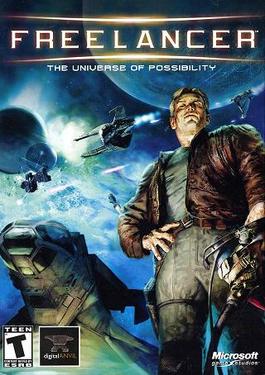
And so begins my last week in New York for three whole months, with a plate of Puerto Rican food and a pint of some bittersweet Black Sheep Ale watching the late afternoon football games and monitoring the progress of my fantasy football team (go Union Thugs! 2-0 baby). Starting September 28th through December 31st (at least) I'll be in the Bay Area for work. Luckily, I'll be staying in an apartment instead of in and out of hotels, at least after the first week.
There was this computer game I wanted when I was like 16, Freelancer, where you play a cargo runner/soldier of fortune of sorts, who takes on various missions in order to amass a fortune, upgrade your ship, and achieve a certain level of status and reputation throughout the galaxy. I was big into gaming, then or now, so I didn't know that it was a very highly anticipated game, all I knew was that the concept was attractive to me, and for more than just entertainment. That air of independence, even if it truly is a facade, is so appealing. At its core, it's not necessarily a world devoid of attachments, but it does mean being attached to people and institutions almost completely on your own terms. At it's worst it's completely insular and more than a little bit immature, particularly when it's applied to relationships to people rather than relationships to institutions. What's more it clashes with any kind of sense of loyalty, a sense of community, and it's impractical if you want to establish any kind of relationship long-term.
So I guess the best thing to do is to get it in the small of doses that you can, which is why I'm always so game to go when my job wants me to travel. Maybe it's my Navy brat upbringing, but I start to get the shakes whenever I stay in one place too long. Although I'm firmly attached to my job, for a little while I can feel or pretend that I'm doing something for myself. And when those days come where I got that lawn and the mortgage I can tell my kids about my days sweltering in a Miami hotel getting stood up in a Coral Gables hospital or running down the streets of west Chicago or three months living on the eastside of the San Francisco Bay. Just my small bit of the independent life before I did what was good for me.
Thursday, August 27, 2009
Socrates Reprised
It was one of those hot nights, air was like sticky and sweet, the kind that puts beads of sweat on your forehead, the kind that makes you want to get out of the house before you slowly melt. Don't know if it was a coincidence, but it just so happened that I wanted to see this one Italian film, "Gomorrah," at Socrates, a sculpture park about ten blocks west of me on the border of the East River. It's funny because about year ago today something similar happened. I'd just moved to New York, a bit lonely, bored out of my mind, and the apartment I was living in felt like And Socrates was playing 8 1/2 by Federico Fellini. And since I had no one to go with, I went by myself. I guess it was some kind of theme night, because they had a stand serving meatballs and eggplant, pasta, and cannolis for desert, and some of the best coffee I've ever had. In front of the screen they had some band playing some Nino Rota lite, soothing enough to drink some coffee to. But mostly I remember when the film started sitting on the grass in my shorts because I forgot to bring a blanket, looking around at the people with their companions and dogs, wine bottles and glasses, french bread, fruit, and cheese. Throughout the crowd I saw only one other person by themselves, a Black lady in her late 20's with a red and yellow scarf wrapped around dreads that went down to her shoulders, looking even lonelier than I felt. But at least she'd brought a blanket to sit on. I started to get cold as the wind blew off the river, but there's nothing like sipping coffee to warm you up while watching a film in a language you can't understand.
Round 2, and this time I went alone again. Walked down that same streets, past the same guys playing soccer on artificial turf, past the same oily taxi repair shops. Past the blue and metal paneled diner that I loved to eat at but always made my stomach cramp. Except this time, I had a bag with me, this time I remembered to bring some food and a blanket. Turkey sandwich with swiss cheese and mustard and two beers, Brooklyn Lager and Brooklyn East India Pale Ale, not cabernet sauvignon and brie exactly, but more filling, and I needed something to differentiate myself from everyone else. When I walked in I saw all the same things that I had last time. There was a line for meatbalss and cannolis, the same band playing the theme from the Godfather, the same people with their dogs and wine. And I took my place, pretty close to where I was last year, the same awkward spot where the ground starts to slope backwards and the grass is mostly dirt. I've kind of had that feeling for a while now though, feeling of sameness, stagnation. Maybe next time I could bring somebody or something, spice it up a bit (getting people to come out to Queens though?)
The movie itself was pretty boring, more concerned with the filming technique than with story development (and it was shot very well, capturing the grit of Italy, a country that in many parts sits on the brink of third world status). The tryptophan and beer did it's job though and I fell asleep for most of the last quarter of the movie, and at least I had a blanket to sleep on.
Round 2, and this time I went alone again. Walked down that same streets, past the same guys playing soccer on artificial turf, past the same oily taxi repair shops. Past the blue and metal paneled diner that I loved to eat at but always made my stomach cramp. Except this time, I had a bag with me, this time I remembered to bring some food and a blanket. Turkey sandwich with swiss cheese and mustard and two beers, Brooklyn Lager and Brooklyn East India Pale Ale, not cabernet sauvignon and brie exactly, but more filling, and I needed something to differentiate myself from everyone else. When I walked in I saw all the same things that I had last time. There was a line for meatbalss and cannolis, the same band playing the theme from the Godfather, the same people with their dogs and wine. And I took my place, pretty close to where I was last year, the same awkward spot where the ground starts to slope backwards and the grass is mostly dirt. I've kind of had that feeling for a while now though, feeling of sameness, stagnation. Maybe next time I could bring somebody or something, spice it up a bit (getting people to come out to Queens though?)
The movie itself was pretty boring, more concerned with the filming technique than with story development (and it was shot very well, capturing the grit of Italy, a country that in many parts sits on the brink of third world status). The tryptophan and beer did it's job though and I fell asleep for most of the last quarter of the movie, and at least I had a blanket to sleep on.
Friday, July 24, 2009
Chili Dawgs Still Bark at Midnight
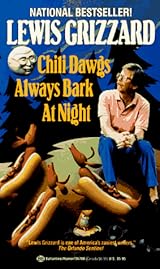
I don't know if it was the howling mutts wrapped in hot dog buns or the bewildered look on Lewis Grizzard's face as he stares up at that smiling moon, his eyes guarded by those unimaginably dorky glasses band across the top of the frames (my father had a pair), but I was completely fascinated by this dusty pocket-sized paperback my dad had near his military duffel bag. Don't really know why, but I knew that I had to read it- in my eyes it was absolutely adult, without being too academic like the books they forced me to read in school. I took it from my father's room and read the whole damn thing in one sitting.
Looking back, I can only vaguely remember reading it. Only a few of the stories really stood out, one about televangelist and one about Kentucky Fried Chicken, but a the time, it was something special, a foray into a world that I'd known very little about. Grizzard was a southerner through and through, at a time when I was Even without remembering most of the stories, I do remember that I enjoyed his irreverence and his varied sense of humor.
The strange thing is that I'm quite certain that if Grizzard was alive and writing today, I would absolutely despise him. To me, he represents everything that is wrong with old-time sportswriters and conservative southerners, namely, their stubborness and dogmatism, their inability to empathize with anyone, and mostly their hypocrisy. Grizzard was married three times, and yet he was a purported traditionalist when it came to values. He wasn't a religious man per se, instead he was just someone who was incredibly sure that the society he grew up in was right- or if not that, then at least good enough to survive an assault from a more modern world.
I've talked before about cities that represent a specific time and place in America's history. For the 60's, or at very least the late 60's, that city was Haight-Ashbury/Summer of Love San Francisco. The late 70's to early 80's was the Son of Sam's New York. It's a bit tougher to choose for the 1980's, but I think that Lewis Grizzard's Atlanta would be as good a city as any to choose. Atlanta started to flex its muscles in the 1980's- it was still a defiantly Southern town, with Southern sensibilities, but with success comes changes and transplants, and a confrotation between the values of the people who And it was that disappearnce of that old South that Grizard was decrying. A South that didn't take itself too seriously when dealing with each other, but one that also became hyper defensive when their problems were pointed out. A place of purported family values that nonetheless winked, nodded, or turned a blind eye towards the inclination that much of their population had towards the seven deadly sins.
White Southerners have a lot more in common with Black people then they think. Most of their history has been spent feeling or being inferior, at least by the common social and economic metrics we use to measure such things. Sooner or later though, a culture begins to develop around that feeling of inferiority, and while I think it is certainly generalizing, I think white southern culture reveled a bit in its informality, its more overt displays of masculinity and femininity, and its emphasis on a principled value system (no matter how many times those principles were violated). Yeah you Northerners may have more money and better education, but we sure know how to have a good time. A professor of mine in college, during a lecture on the antebellum South, talked about how important the culture of honor was, and I think that it's importance, while not as strong, still lingers to this day. I also think you can see remnants of this in the modern Republican party, both envigorated and imprisoned by its value system. And that's what Grizzard's book, admittedly in hindsight, represents for me. It's probably very hard for people to think of a Lewis Grizzard book as an example of the frustration, anxiety, hatred, and humor with which Southern white people dealt with the makings of the "New South," but for me it definitely is.
Sunday, July 12, 2009
New Gotham
Thank God for indigestion- the hamburger crowned America's best burger by "Good Morning America" did not agree with me falling asleep too long and my stomach did all types of somersaults at 3am. Reminds me of that Lewis Grizzard book I found in my dad's room when I was 11; I guess burgers wait a little bit longer before they start to bark (I want to write about that book sometime). But I was fortunate really that I'd woken up when I did. In my pursuit to meet a college classmate for a fine slice of Kobe beef, I'd completely forgotten to pick up some deodarant and a pair of black socks that I needed for the meeting tomorrow. (In my defense, the burger, which was good but far from America's best, was topped with a healthy chunk of brie. The taste of brie and burger is interesting enough to fool someone into thinking that the burger is America's best).
After finding out where the nearest Walgreen's was, I stumbled out of my downtown Chicago hotel onto the quiet streets. A comforting quiet really, not an eery quiet, interrupted by idling municipal trucks parked next to a manhole, men in their white jumpsuits suspended by rope lowered deep into the dark sewer. I love the look of Chicago, I think it does a better job of blending old and new than any other city in the country. Chicago, at least in my mind, doesn't try to escape from its gritty past, in many ways it still looks like a souped-up 1920's gangster film. To this day, Al Capone would not look out of place crossing the river at La Salle. It's probably why Christopher Nolan decided to shoot "The Dark Knight" there rather than in New York. Obviously I wasn't here for New York during it's downtrodden heyday, but from the looks of things, it's far too glamorous, far too safe to be anyone's Gotham. It's commendable that the Dinkins and Giuliani and Bloomberg administrations did such a good job in cleaning up the city, cracking down on crime, destroying the Son of Sam and New Jack City, New York. But a good city for business and families and quality of life makes for a pretty lousy Gotham.
The sounds changed after I crossed the river. More cars, more lights, even the wind picks up its pace slightly. A Black lady walking on my side of the street but in the other direction hugged herself close. Her fingers nervously rubbed the side of her pink tank top. Her legs were long enough to last the whole summer and every nervous and wobbly step they took reminded me of a baby gazelle the moment before it's taken down by a pride of lions. She looked like she'd be tough enough, on her best days, to stand toe-to-toe with any motherfucker that dare cross her path, tonight tears framed the middle of her face. Past her, the unmistakable smell of urine and body odor and alcohol was strong enough to make my eyes water. I found the source when I got to the corner, a man in a dirty white shirt shuffled his way down Ontario, propped up only by the buildings on his left and the occasional wayward trash can on his right. I imagined that the first alley he found was where he'd call it a night.
One Power Vitamin Water, three pairs of black socks, a stick of Mitchum deodarant, six pencils, and two pens later I was on my way back home. On the other street corner, next to a two-story McDonald's I saw a group of maybe eight or nine people having a good time. I went over to get a closer look, maybe McDonald's at damn near 4am was the happenin spot downtown. Turned out to be two crazy guys talking to bronze statues of little kids. I decided to take a different way back, one that was just a little bit darker, to revel in the quiet just a little bit more. No cars at all this time, just the gentle wind, the subtle river, and the sound of my own footsteps. I love Chicago, but there's just no comparison between it and New York. The only way downtown would ever be this quiet, this lazy, was if a nuclear bomb went off on Canal Street. In the city at least, I could never imagine passing no one, on any street, at any time. Don't know if that's a good thing or not. I made it back to my hotel close to 5am, enough time for one hour of sleep and morning full of a whole bunch of coffee.
After finding out where the nearest Walgreen's was, I stumbled out of my downtown Chicago hotel onto the quiet streets. A comforting quiet really, not an eery quiet, interrupted by idling municipal trucks parked next to a manhole, men in their white jumpsuits suspended by rope lowered deep into the dark sewer. I love the look of Chicago, I think it does a better job of blending old and new than any other city in the country. Chicago, at least in my mind, doesn't try to escape from its gritty past, in many ways it still looks like a souped-up 1920's gangster film. To this day, Al Capone would not look out of place crossing the river at La Salle. It's probably why Christopher Nolan decided to shoot "The Dark Knight" there rather than in New York. Obviously I wasn't here for New York during it's downtrodden heyday, but from the looks of things, it's far too glamorous, far too safe to be anyone's Gotham. It's commendable that the Dinkins and Giuliani and Bloomberg administrations did such a good job in cleaning up the city, cracking down on crime, destroying the Son of Sam and New Jack City, New York. But a good city for business and families and quality of life makes for a pretty lousy Gotham.
The sounds changed after I crossed the river. More cars, more lights, even the wind picks up its pace slightly. A Black lady walking on my side of the street but in the other direction hugged herself close. Her fingers nervously rubbed the side of her pink tank top. Her legs were long enough to last the whole summer and every nervous and wobbly step they took reminded me of a baby gazelle the moment before it's taken down by a pride of lions. She looked like she'd be tough enough, on her best days, to stand toe-to-toe with any motherfucker that dare cross her path, tonight tears framed the middle of her face. Past her, the unmistakable smell of urine and body odor and alcohol was strong enough to make my eyes water. I found the source when I got to the corner, a man in a dirty white shirt shuffled his way down Ontario, propped up only by the buildings on his left and the occasional wayward trash can on his right. I imagined that the first alley he found was where he'd call it a night.
One Power Vitamin Water, three pairs of black socks, a stick of Mitchum deodarant, six pencils, and two pens later I was on my way back home. On the other street corner, next to a two-story McDonald's I saw a group of maybe eight or nine people having a good time. I went over to get a closer look, maybe McDonald's at damn near 4am was the happenin spot downtown. Turned out to be two crazy guys talking to bronze statues of little kids. I decided to take a different way back, one that was just a little bit darker, to revel in the quiet just a little bit more. No cars at all this time, just the gentle wind, the subtle river, and the sound of my own footsteps. I love Chicago, but there's just no comparison between it and New York. The only way downtown would ever be this quiet, this lazy, was if a nuclear bomb went off on Canal Street. In the city at least, I could never imagine passing no one, on any street, at any time. Don't know if that's a good thing or not. I made it back to my hotel close to 5am, enough time for one hour of sleep and morning full of a whole bunch of coffee.
Tuesday, June 30, 2009
Living Off the Wall
When I first heard the news that Michael Jackson died I didn't think too hard about it. Sure I was sad that a person who made such great music and was so beloved by the world had fallen to such unthinkable depths, an agonizing crawl from the absolute height of worldwide fame that could ever be achieved by a human soul to the subject of near constant ridicule and scorn (even until the end though there was constant love). In many ways the person my parents and my older cousins knew growing up had been dead for damn near twenty years, replaced by something that looked very much like a ghost. As much as people my age hate to admit it or try to pretend otherwise (and by my age I mean anyone who was less than 3 when Thriller came out), we didn't really know who Michael Jackson was. By the time we were cognizant, he had already become something of a circus freak. Bad was released in 1987, a few days before I turned 1, and he'd already completely changed his color and his hair. He still made good music, but when I heard or thought about Michael Jackson during my formative years the negative ("I pledge allegiance to the flag, that Michael Jackson is a fag," the "In Living Color" send-up of the "Black or White" video, the child molestation charges) completely outweighed the positive (my cousins VHS of Moonwalker). Not to say that I wasn't completely entranced by the man, even as a little kid. I knew he was important, an outsized celebrity before I even knew what a celebrity was. When I took my test to get into kindergarten and the proctor told me to draw something, I drew Michael Jackson, albeit with an enormous head (anyone who remembers the Speed Demon video from Moonwalker might get why. Needless to say, they said I did not get into kindergarten). But I can't say that I really knew or loved Mike. Not the way my cousins can, not the way the people I saw at the Apollo can. I can love his music, his history and like to the greats from Motown's past, his undeniable genius and enormous talent surrounded by an equally undeniable pain. But his justfiable heyday as the biggest pop star this planet has ever known is an era that I just missed, and it would be dishonest if I mourned him as if I was a front-row spectator for the creation of a legend, when really, I just watched the re-run.
These past couple of days though as every car that passes blares "Billie Jean" and "Beat It" and every other track from his magnum opus out of half rolled down windows, I've found myself gravitating towards songs from "Off the Wall." It's not to be contrary, I enjoy "Thriller" just like everyone else. It's just that, for some reason, when I listen to "Off the Wall," I feel like I'm listening to Michael's last hope. It's well known that Michael was disappointed after the release of "Off the Wall." Although it was critically lauded, he felt that it hadn't been treated with respect by the Grammy's, and he vowed that it would never happen again. When he released "Thriller" he was a man on a mission, to become the biggest and richest pop star the world had ever known. And he did that, it took him three years, but he accomplished what he set out to do. But what was the ultimate cost? Everybody knows how well hindsight can see, but knowing how damaged Michael's psyche was, would it have been better for him and for his life had he not accomplished his ultimate goal? What if he'd been satisfied with the success of "Off the Wall" (and it was still uber-succesful, ultimately selling 7 million copies in the US and having four top ten hits)? "Off the Wall" sounds like pure joy a man has on gaining his independence. "Thriller" sounds like a man on a mission, and the man became ensnared and trapped by the consequences of that mission's successful completion for the rest of his life. My sister said to me that when she looks at a picture of a young Michael Jackson when he was with the Jackson 5, she wants to give him a hug and tell him everything is going to be okay. I want to walk up to the 21 year old Michael after "Off the Wall," won only one Grammy and tell him how great the album was. Maybe we wouldn't get "Thriller," but we also wouldn't get everything that came after it too. Rest in Peace Mike
Monday, June 8, 2009
The Heart of a Slacker
Back in 11th grade, when I was in pre-calculus, I had a teacher who'd give out homework every night. And every night after I came home from work, I wouldn't do it. I'd lay on the couch or watch something on TV or do something useless on the computer, anything but do my homework. There'd always be a rationalization, usually that 6 hours of pushing carts and cleaning up spills was so tiring that there was no way in hell that pre-calculus could get done. Besides, the work was so easy that I could start it in 2nd period general music class and finish as I was walking to third period. Only of course that's never how it worked out. I'd use my dear time in general music unsuccessfully trying to get with this one chick (who ironically I ended up dating a year and a half later) or laying my head down on one of the cold black music stands that I pulled over from the back of the classroom. So everyday, when my teacher would come around to collect the homework, I wouldn't have anything. And she'd look at my with such disappointment. And for the most part, I wouldn't care, figuring that I aced all my tests so at the very least I'd walk away with a B. But one day after class was dismissed, I was the last person left in the classroom. I was putting my notebook in my bag when my teacher walked up to me.
"Antonio, do you know what you're grade in my class is?"
I really didn't have any idea, hadn't really thought about it.
"Right now you have an 84. And you know what, you're capable of having a 104 if you'd just turn in your homework."
And the way she said it, her voice didn't match the look she'd always given me while collecting everyone elses papers. No, it wasn't that almost maternal disappointment she flashed so often, it was a look that bordered on disdain, as if she couldn't fathom a person such as myself. I was like a lazy bug on the bottom of her New Balances. And it was that look and only that look that got me to do my homework, or at least occasionaly. There were still plenty of days where I'd hand in nothing, but they were outnumbered by the ones that I did. Never got that 104, but a respectable 93 was all I could ask for.
Through my almost 23 years on this planet, I've had a lot of teachers disappointed in me, mostly for the same reasons that my pre-calculus teacher was. Like the mid-90's Mariners or the early 2000's Sacramento Kings, somehow the perceived talent never matched up with the finished product. The conclusion I've come to is that deep in my heart, I am a slacker. Now there's a difference between being a slacker and being lazy. I don't think I'm lazy, because laziness implies an unwillingness to work. It is still very possible to be a slacker and still give enough effort to succeed, to appear as if you're working hard and even have results which imply just as much. I think I fall nice and squarely into the latter category, even if only because of the sense of ambition that was driven into me from every adult that's ever meant anything to me in my life. But the ambition I have is also a result of an inherited ego that's way too large for me to be a grocery store philospher (I've known and worked with a few and I envy them). The traditional barometer of success is something that I believe in though, something that I am more than willing to adhere to, for completely vain-glorious reasons (marry a good woman, have a nice bit of money, and have people think of me as intelligent, interesting, and wise). Because truth be told, the best job I ever had was being the mid-day Drug/GM stocker at Kroger. I was the only person in the department, I got a chance to think, I read political magazines and complex novels on my lunch break, I got to interact with coworkers and customers when I wanted companionship, and I got to conveniently disappear when I didn't. If money was not an object, I'd really consider doing that for the rest of my life. Just because you love intellectual discussions and keep abreast on obscure current events doesn't mean you're a scholar. And I know that I'm not, but the expectation is that I should be.
"Antonio, do you know what you're grade in my class is?"
I really didn't have any idea, hadn't really thought about it.
"Right now you have an 84. And you know what, you're capable of having a 104 if you'd just turn in your homework."
And the way she said it, her voice didn't match the look she'd always given me while collecting everyone elses papers. No, it wasn't that almost maternal disappointment she flashed so often, it was a look that bordered on disdain, as if she couldn't fathom a person such as myself. I was like a lazy bug on the bottom of her New Balances. And it was that look and only that look that got me to do my homework, or at least occasionaly. There were still plenty of days where I'd hand in nothing, but they were outnumbered by the ones that I did. Never got that 104, but a respectable 93 was all I could ask for.
Through my almost 23 years on this planet, I've had a lot of teachers disappointed in me, mostly for the same reasons that my pre-calculus teacher was. Like the mid-90's Mariners or the early 2000's Sacramento Kings, somehow the perceived talent never matched up with the finished product. The conclusion I've come to is that deep in my heart, I am a slacker. Now there's a difference between being a slacker and being lazy. I don't think I'm lazy, because laziness implies an unwillingness to work. It is still very possible to be a slacker and still give enough effort to succeed, to appear as if you're working hard and even have results which imply just as much. I think I fall nice and squarely into the latter category, even if only because of the sense of ambition that was driven into me from every adult that's ever meant anything to me in my life. But the ambition I have is also a result of an inherited ego that's way too large for me to be a grocery store philospher (I've known and worked with a few and I envy them). The traditional barometer of success is something that I believe in though, something that I am more than willing to adhere to, for completely vain-glorious reasons (marry a good woman, have a nice bit of money, and have people think of me as intelligent, interesting, and wise). Because truth be told, the best job I ever had was being the mid-day Drug/GM stocker at Kroger. I was the only person in the department, I got a chance to think, I read political magazines and complex novels on my lunch break, I got to interact with coworkers and customers when I wanted companionship, and I got to conveniently disappear when I didn't. If money was not an object, I'd really consider doing that for the rest of my life. Just because you love intellectual discussions and keep abreast on obscure current events doesn't mean you're a scholar. And I know that I'm not, but the expectation is that I should be.
Tuesday, May 26, 2009
City, Country, City
Listening to "City, Country, City" by WAR. Unfortunately I cannot find a link to the song. I'll have to put it on when I get home; they were one hell of a band!
I really think this song should be called, "Country, City, Country." It starts out so languid, tranquil even, the harmonica strong but lazy like a clear sunny day when you have nothing to do. Reminds me of the heat bearing down on me walking up a dry green hill, my feet stomping on grass that's been baked over twice. Only later does it get fast paced, country harmonica gives way to city saxophone. Not that smooth jazz urbane saxophone that frequents every R&B song from the late 80's. I'm talking an urban sax that jolts the senses, crashes into you like the unapologetic businessman checking his BlackBerry down 42nd Street. And just like that you head straight back, to the sun, to something so peaceful. It's hard to choose between the two sometimes and I'm not speaking in a metaphorical sense. My junior year of college I went to this conference where this guy, Peter Raven, talked about how apartment living would make the most economic and ecologic sense; that people would have more green space and be much mroe energy efficient if only we lived like people in say, Hong Kong. And that's true, and I want all that, it appeals to my logical sensibilities and any kind of vision that I have for the world. I want the culture and the subway, the pace and the people, everything that comes with living stacked high on top of millions of other people. But damn it if I don't want a big ass yard to mow and make more even than Steve Harvey's afro. And I want that big ass yard in front of a big ass house with a humongous den where I can hide from my family while watching a baseball game. Everything slowed down to a molasses drip; can absorb everything I love about being alone. All the green space to myself, as energy efficient as a 5-year old Hummer.
F. Scott Fitzgerald said that the test of a first rate intelligence is to hold two opposed ideas in mind at the same time and still retain the ability to function. I wonder if holding diametrically opposed emotions gives one a first rate heart? The thing about Fitzgerald's quote is that I've always found it relatively easy to hold two opposing ideas; I'd argue that it wouldn't be worth having a brain really if you didn't. Rather than impeding my ability to function, debating two opposing ideas inside my head feels utterly liberating. This is certainly because the ideas I end up debating in my head are mostly superfluous. I'm not a lawyer or a judge or some kind of person who has any real responsibility. There are very few consequences to the ideas I play around with.
Emotions though, how you feel about something or someone, that's a lot harder. Whenever they're in conflict I find my entire body shutting down, losing the ability or the will to move, paralyzed by the way I feel or the idiotic things I've done. Maybe it's my body slowing down trying its best to allow my brain to catch up. Maybe if there's just a little more time I can make everything coherent again. I can live with cognitive dissonance when it involves something philosophical like a Supreme Court decision, or hate crimes legislation. But when there's a conflict about how you feel, the ultimate conclusion is that maybe you're not the man you thought you were, the one you pretend to be.
I really think this song should be called, "Country, City, Country." It starts out so languid, tranquil even, the harmonica strong but lazy like a clear sunny day when you have nothing to do. Reminds me of the heat bearing down on me walking up a dry green hill, my feet stomping on grass that's been baked over twice. Only later does it get fast paced, country harmonica gives way to city saxophone. Not that smooth jazz urbane saxophone that frequents every R&B song from the late 80's. I'm talking an urban sax that jolts the senses, crashes into you like the unapologetic businessman checking his BlackBerry down 42nd Street. And just like that you head straight back, to the sun, to something so peaceful. It's hard to choose between the two sometimes and I'm not speaking in a metaphorical sense. My junior year of college I went to this conference where this guy, Peter Raven, talked about how apartment living would make the most economic and ecologic sense; that people would have more green space and be much mroe energy efficient if only we lived like people in say, Hong Kong. And that's true, and I want all that, it appeals to my logical sensibilities and any kind of vision that I have for the world. I want the culture and the subway, the pace and the people, everything that comes with living stacked high on top of millions of other people. But damn it if I don't want a big ass yard to mow and make more even than Steve Harvey's afro. And I want that big ass yard in front of a big ass house with a humongous den where I can hide from my family while watching a baseball game. Everything slowed down to a molasses drip; can absorb everything I love about being alone. All the green space to myself, as energy efficient as a 5-year old Hummer.
F. Scott Fitzgerald said that the test of a first rate intelligence is to hold two opposed ideas in mind at the same time and still retain the ability to function. I wonder if holding diametrically opposed emotions gives one a first rate heart? The thing about Fitzgerald's quote is that I've always found it relatively easy to hold two opposing ideas; I'd argue that it wouldn't be worth having a brain really if you didn't. Rather than impeding my ability to function, debating two opposing ideas inside my head feels utterly liberating. This is certainly because the ideas I end up debating in my head are mostly superfluous. I'm not a lawyer or a judge or some kind of person who has any real responsibility. There are very few consequences to the ideas I play around with.
Emotions though, how you feel about something or someone, that's a lot harder. Whenever they're in conflict I find my entire body shutting down, losing the ability or the will to move, paralyzed by the way I feel or the idiotic things I've done. Maybe it's my body slowing down trying its best to allow my brain to catch up. Maybe if there's just a little more time I can make everything coherent again. I can live with cognitive dissonance when it involves something philosophical like a Supreme Court decision, or hate crimes legislation. But when there's a conflict about how you feel, the ultimate conclusion is that maybe you're not the man you thought you were, the one you pretend to be.
Sunday, May 17, 2009
Adventures in Code Crossing
Sitting here listening to some kind of blend of Aretha Franklin's "Lady Soul," and Van Hunt's classically underrated eponymous first album.
I wouldn't say that it's happened a lot, but there have been a few people who have commented on the way that I talk in the past couple of months. Not the tone of my voice so much, as my vocabulary, my word choice. Being up in New York, I've had a few people comment that I talk like I'm from the South. And while I'm in the South it is generally understood that I am from somewhere up North. Not a full fledged Yankee mind you; maybe Philadelphia or something.
I guess it has a lot to do with fitting in; I've had to do it often- code switching it's called (learned that from an interdisciplinary class that had a foot in the linguistics department). Everyone code switches of course, whether you are moving from a formal setting to a more casual setting, or you are moving from a casual setting with family to a casual setting with friends, our way of speaking changes in marked as well as subtle ways depending on the situation. Code switching is not absolute though, it is impossible to completely change your style of speech. The markers that identify who you are, where you come from, the people you hang around, they always stay with you. When you're trying to fit in they come out subconsciously, sometimes in the most unfortunate situations (like when you're talking nervously trying to impress a suited-up civic leader, that's for another day though). Those who do it best usually can keep those slips to a minimum.
A far more common phenomenon, or at least something I know I do, is the intentional mixing of different styles of speech. I don't know exactly what to call it, but there has to be a term for it in some lingustics text book. For now, let's call it "code-crossing," using at least two separate styles of speech in conversation, at the same time, in order to signify both your insider and outsider status.
"Code-crossing" can be both an offensive and defensive mechanism; I shall give you examples for both.
For the first example, let's take a hard working young man who finds himself at university. And at this university, he takes a class, a class, perhaps, on inner city public school education. And furthermore, having gone to an inner city public school he finds himself surrounded by students who went to Gossip Girl style expensive private schools or at the very least elite public schools. Now, it is true, the young man could discuss the topic, inner city public schools, just like everyone else in the class, using the words and mannerisms and style of an educated man who more than holds his own at this particular institution of higher learning. And he does..... for the most part. But every so often, he puts in a few choice inflections, cuts off a few "g's" at the end of his sentences as he embarks on tales of the woeful inadequacy of his particular high school, a school that symbolizes the inequities within our society. Implicitly, he's saying that it is his right to dominate conversation on this topic. But it's not enough to show that he can hold his own, no, he has to shame his fellow classmates as well.
"Look at you, the advantaged children of the wealthy! I didn't have your advantages and yet we still ended up at the same place; you're pitiful. If I'd gone to (insert fancy private school) they would have named me Chancellor by now. Hang your head in shame!" Offensive code-switching is best used when a dash of outsider status confers some kind of expertise or authority.
Now, let's take the same young man, only this time, let's place him in an entirely different scenario. A fancy dinner, the kind with a bunch of different forks and glasses and courses (yes I know it's a more than a little cliche). Everyone is confidently eating and socializing, using the inner and outer forks correctly, while he has to look down at his hands and make the "d's" and "b's" to remember where his drink and bread goes. In order to save face, code-crossing can be very helpful in this instance also. This time though, it will signal that "Hey I'm an upwardly mobile young man, but back where I'm from, we didn't have all these crazy utensils and cloth napkins and such." Guaranteed to buy you two faux paus before the dinner is over.
The key with code-crossing is it has to be strong to where the message is definitely delivered, but subtle enough where it doesn't seem intentional. It can take years of practice, but with repetition and diligence, in the long run you'll be able to get the effect you're looking for.
I wouldn't say that it's happened a lot, but there have been a few people who have commented on the way that I talk in the past couple of months. Not the tone of my voice so much, as my vocabulary, my word choice. Being up in New York, I've had a few people comment that I talk like I'm from the South. And while I'm in the South it is generally understood that I am from somewhere up North. Not a full fledged Yankee mind you; maybe Philadelphia or something.
I guess it has a lot to do with fitting in; I've had to do it often- code switching it's called (learned that from an interdisciplinary class that had a foot in the linguistics department). Everyone code switches of course, whether you are moving from a formal setting to a more casual setting, or you are moving from a casual setting with family to a casual setting with friends, our way of speaking changes in marked as well as subtle ways depending on the situation. Code switching is not absolute though, it is impossible to completely change your style of speech. The markers that identify who you are, where you come from, the people you hang around, they always stay with you. When you're trying to fit in they come out subconsciously, sometimes in the most unfortunate situations (like when you're talking nervously trying to impress a suited-up civic leader, that's for another day though). Those who do it best usually can keep those slips to a minimum.
A far more common phenomenon, or at least something I know I do, is the intentional mixing of different styles of speech. I don't know exactly what to call it, but there has to be a term for it in some lingustics text book. For now, let's call it "code-crossing," using at least two separate styles of speech in conversation, at the same time, in order to signify both your insider and outsider status.
"Code-crossing" can be both an offensive and defensive mechanism; I shall give you examples for both.
For the first example, let's take a hard working young man who finds himself at university. And at this university, he takes a class, a class, perhaps, on inner city public school education. And furthermore, having gone to an inner city public school he finds himself surrounded by students who went to Gossip Girl style expensive private schools or at the very least elite public schools. Now, it is true, the young man could discuss the topic, inner city public schools, just like everyone else in the class, using the words and mannerisms and style of an educated man who more than holds his own at this particular institution of higher learning. And he does..... for the most part. But every so often, he puts in a few choice inflections, cuts off a few "g's" at the end of his sentences as he embarks on tales of the woeful inadequacy of his particular high school, a school that symbolizes the inequities within our society. Implicitly, he's saying that it is his right to dominate conversation on this topic. But it's not enough to show that he can hold his own, no, he has to shame his fellow classmates as well.
"Look at you, the advantaged children of the wealthy! I didn't have your advantages and yet we still ended up at the same place; you're pitiful. If I'd gone to (insert fancy private school) they would have named me Chancellor by now. Hang your head in shame!" Offensive code-switching is best used when a dash of outsider status confers some kind of expertise or authority.
Now, let's take the same young man, only this time, let's place him in an entirely different scenario. A fancy dinner, the kind with a bunch of different forks and glasses and courses (yes I know it's a more than a little cliche). Everyone is confidently eating and socializing, using the inner and outer forks correctly, while he has to look down at his hands and make the "d's" and "b's" to remember where his drink and bread goes. In order to save face, code-crossing can be very helpful in this instance also. This time though, it will signal that "Hey I'm an upwardly mobile young man, but back where I'm from, we didn't have all these crazy utensils and cloth napkins and such." Guaranteed to buy you two faux paus before the dinner is over.
The key with code-crossing is it has to be strong to where the message is definitely delivered, but subtle enough where it doesn't seem intentional. It can take years of practice, but with repetition and diligence, in the long run you'll be able to get the effect you're looking for.
Monday, May 4, 2009
Just a Thought About Dreams
To the conscious mind, dreams are pretty much random. I've had dreams about polar bears inside a funhouse, speaking naked at a debate tournament, and my brother getting hit by a car in Beaufort, years after we left, across the street from Alvin Ords because he was breakdancing in the middle of traffic. Anyway, all of those dreams and many more that I can remember had absolutely nothing to with what I'd been going through the days or even weeks before the dream occurred. Now, I'm certain that to my subconscious those dreams certainly did have something to do with my day/feelings/worries and interpreting them in such a fashion is always fun (I briefly tried to keep a dream log). Occasionally though, you have a dream that is incredibly topical, the kind where the moment after you wake up you sit up and let each concrete moment settle in your head- the bits and pieces that are hazy get swept into the dust bin, the most vivid parts taking over the narrative, gradually becoming a compelling story, one now more worthy of interpretation.
The thing about those dreams is that they touch you supernaturally, like an angel visiting softly in the night. Even the most vivid dreams are still ephemeral; in many ways they are the one outlet you have to the mysteries inside your head, the part of you that you have no control over. Topical dreams have helped me make decisions, helped me to appreciate the people I love, solidified my principles, and scared me half to death, much more so than the nightmares I use to have when I was little. At their best, the sense of mystery is awe-inspiring, at their worst completely nerve-wracking. I go through periods where my dreams are incredibly vivid; they strike without warning and last for only a short period of time. I wish I could go through one of them again, just for fun, just to give me something else to ponder when I'm bored with the life that I actually got.
The thing about those dreams is that they touch you supernaturally, like an angel visiting softly in the night. Even the most vivid dreams are still ephemeral; in many ways they are the one outlet you have to the mysteries inside your head, the part of you that you have no control over. Topical dreams have helped me make decisions, helped me to appreciate the people I love, solidified my principles, and scared me half to death, much more so than the nightmares I use to have when I was little. At their best, the sense of mystery is awe-inspiring, at their worst completely nerve-wracking. I go through periods where my dreams are incredibly vivid; they strike without warning and last for only a short period of time. I wish I could go through one of them again, just for fun, just to give me something else to ponder when I'm bored with the life that I actually got.
Saturday, April 25, 2009
Morning Coffee
So I'm by myself in my girlfriend's apartment, drinking coffee, reading the Atlantic. No matter how much I tell myself that I love the hustle and noise, the sounds of my neighborhood, the liveliness of the city, there's nothing nearly as peaceful to the mind as a quiet neighborhood early in the morning on a weekend. Part of it is being alone, part of it is that the people who live here are still fast asleep. Their children are in the living room watching cartoons and the only sounds I can hear besides my hand on the keyboard is the "pop" of a tennis ball awkwardly hitting a racket, and a few songbirds chirping as they chase each other from tree to tree. Maybe it's just the ability to concentrate more than I usually get a chance to. I guess it's connected to all those studies about light and noise pollution. The ways in which the end of night time and the end of tranquility has disrupted our circadian rhythms. Or something like that.
I know it's impossible to have it all three ways- to have the suburbs when I want memories of being a kid playing in the streets on base, the country when I want to be alone with my thoughts, the city when I absolutely crave the excitement. A guy can dream just a bit though.
I know it's impossible to have it all three ways- to have the suburbs when I want memories of being a kid playing in the streets on base, the country when I want to be alone with my thoughts, the city when I absolutely crave the excitement. A guy can dream just a bit though.
Saturday, April 11, 2009
Blogging Howlin Wolf: The Definitive Collection
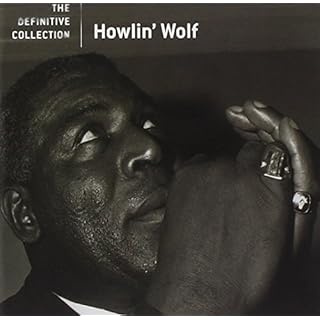
I have been meaning to do this for some time, right after I did the live-blogging for Sketches of Spain. But alas, I just couldn't get another one out of me. Without further ado, here's my live-blogging of the incomparable Chester Arthur Burnett or as he's better known Howlin' Wolf
Moanin' at Midnight
The opening is famous- Wolf does his best impression of throat singing. The song is downright scary, but accessible enough to reach #10 on the charts. Simple lyrics but his voice is clearly the star. An auspcious start to an excellent career.
How Many More Years
Your standard jump blues really, both in subject matter (woman doggin him out, he's about to leave) and in style. Surprising that it was the biggest hit he had in his career, because he's had much better songs. Not to belittle it any, Wolf is great on the harmonica, but his singing on this song is just average, with none of the passion that he'd exhibit on later works. Sounds more like a rock and roll precursor than blues really. As a plus though, a pre wife-beating Ike Turner appears on the song.
Evil-
A song about another man sleepin with your woman, while you're out travelin, workin hard for her. Subject matter thoroughly covered by the blues I know, but it's still so well done. Willie Dixon sings lead on this song and he absolutely steals the show, at least in my opinion. Wolf's relegated to the chorus- which he also does very well on. He really stomps his feet into the "e" in evil, until it's twisted and mangled, like it went through a paper shredder on the way out his mouth. The piano is probably the most distinctive- this song has a more Willie Dixon-style to it even though it was written by Wolf- in the sense that it's sounds more like a pop blues song than some of Wolf's other more unique work.
Forty-Four
"I wore my fourty-four so long, it's made my shoulder sore." Changes up the subject matter slightly, about a man with a gun who has a bad case of wanderlust- a woman has to make an appearance (it wouldn't be the blues if it wasn't) but she's inconsequential to the ending. Instead, he pawns his gun for some money, hopefully to start a new life.
But what this song is actually about is the rhythm section, which really shows its muscles after hiding in the background the previous three three tracks. It all starts with the beautiful piano entrance about 18 seconds in, and then they add some bass and rolling drums to the concoction. Willie Dixon, for all his faults (and we'll get to those in a minute) really could play the bass, it really is the force behind this song. Well, him and Wolf's powerful voice, which is the first time he completely put its versatility on display since "Moanin at Midnight." It's impossible not to hear the southern gospel influences in his voice, it'd sit right along nicely on a Mahalia Jackson tune. And that right there, is the central contradiction of the blues. He's singing about a gun making his shoulder sore with the voice of a choir member (on second thought, maybe it's not such a contradiction).
Smokestack Lightnin
Probably the most famous song of his career, or at the very least the most famous song of his career that he wrote for himself. It wasn't his biggest hit (that was How Many More Years), but it did peak at #8, and in all honestly, it completely blows away that song (it's always good when a song is both an excellent track and becomes a hit, what happened to those days?). The subject matters is, what else, a do-wrong woman, but he doesn't come right out and say it, you're not really sure what smokestack lightnin is. The songwriting is sparse, a third of the words are just Wolf moanin', but I don't think he'd ever put more passion into anything he's done. It's at once dreary and sad, utterly distinctive, the verses aren't really verses, it's more like just a stream of accusatory questions between tormented moans. Like Bobby Womack, he's able to convey strength at the same time he conveys vulnerability. My favorite line is towards the end where he says- "Whoa, who been here baby since I, I been gone, a little bitty boy? Girl be on."
The rhythm section is really cooks again and it's a team effort, the underlying riff would be gorgeous if it wasn't so spooky, particularly the bending guitar that always hits a twinge in me everytime I hear it.
I agree with what Wolf said, he can sing his own shit better than he could Willie Dixon's. Only four more songs on the album were written by him after this. The rest of them are by Willie Dixon- who was much more of a pop-blues writer. I think Wolf's appeal was that, although he was smooth for a 6'6'' 300 pound man, he was naturally rough and intimidating. And he was at his best when he had a chance to experiment and wasn't trying to appeal to his pop sensibilities. At he was successful at it.
As a final aside, the last two songs were the reason that I had such a hard time completing this damn thing, I wanted to hear them over and over again.
I Asked For Water
Another hit for Wolf (#8), but a big drop from the last two songs, which struck the right balance between experimental and accessibility. The musicians, after two Hall of Fame performances, decide to take a break. They're sparse to the point of barely being there. The vocal performance is similarly understated. Not a bad song by any means, but you can't really follow Smokestack Lightnin.
Who's Been Talkin
Tha man is the master of the harmonica. This song is very unique, I can tell why it wasn't a hit, but it has a very interesting lineup, with the tenor sax and piano sounding particularly interesting. The underlying riff by the tenor sax weaves through the breaks and really makes this song. I like how, for the most part, Wolf eschews hooks and instead allows the musicians to be the ones to burrow into your head.
Sitting on Top of the World
A slightly different take on the whole "my woman left me" theme. It may be tongue in cheek, but he seems to relish the freedom from not having to bring his lady with him. Hop on a freight train if he wants, work as hard as he wants and can keep all the cash in his own pocket. The songwriting just okay- but by this time Hubert Sumlin, who Wolf had brought with him from Chicago and who had been with the band from jump, had really come into his own. From this point on, his sliding guitar would be the star musician on just about every track. I like to imagine that Wolf was just a little bored with this song after Who's Been Talkin's originality.
Howlin For My Darlin
And we officially depart from the Wolf-written section into section where Dixon handles the songwriting duties. I don't know exactly why they stopped Wolf from writing his own songs; four of the eight songs above were top 10 hits. Perhaps some of his latest experimentations had fallen flat and blues was moving away from his style. Maybe they thought Dixon had more adaptability. Or maybe Leonard Chess (head of Chess Records) wanted to keep everything in-house and have first dibs to all the rights to the songs. Dixon was handling most of the songwriting duties for all the other Chess artists, and if they were paying the man primarily to write, then damn it he'd write for everyone. It's easy to see where my loyalties lie.
The change from Wolf to Dixon can be immediately felt on this song. First, the title is kind of corny not to subtly playing on Wolf's stage name. There are more bright and shiny horns, the better for the ladies to dance to. And he loses all of his spookiness. Even the subject matter itself has changed- in this song, he is raving about how good his woman is. Who wants a blues artist to do that?
Wang Dang Doodle
The ultimate blues standard, but Wolf had it first. Sadly, he did not do it best. It's known that Wolf hated this song and in his autobiography, Dixon said that he hated this song too. It's a rollicking urban party song, which was something new for Wolf, but he just can't really catch a hold of it. Personally, I like Koko Taylor and Little Walter's versions much better.
On the other hand. Hubert Sumlin is teamed up with Freddy King (the baby of the three blues kings) and they both really go to town. I think it's great that the guitars have fun on this song, but a passionless, flavorless, Wang Dang Doodle is not what I want to hear- he just doesn't have the screeching in his repotoire that's required to make this song great.
Back Door Man
The first time I heard this song I didn't think it was anything special, but I've grown to like it a lot. Wolf's on the prowl in this song, visiting all the wives of the neighborhood men in the night, and retreating to his lair during the day. Reminds me a lot of Clarence Carter's "Back Door Santa." The best part of the song is Dixon's dragging bass, which meets up with Wolf while he sings "I am/ a back door man." It's the intermingling of the bass and guitar that make this song really work though, and Wolf really finds his voice in that combo, around the middle of the song. At times, it sounds almost James Brown-ish, a terse three syllables making up the line in the verse. At times it's almost like improvisation.
Spoonful
Rhythm section sounds like a rehash of Smokestack Lightnin, and it's a bit like 100% recycled paper. No matter what the environmentalist tell you, it's just not as good as the original thing. Freddy King, by this time having taken over chief guitar duties, has another excellent performance. Why did they have Dixon writing the songs again?
Since I don't have much of anything else to say about this song, I guess I'll talk a little bit about Howlin' Wolf's life.
His story starts out like most other bluesman who made their way to Chicago by way of Memphis in the 1930's. Born in Mississippi in 1910, he grew up very poor on a farm near White Station. His mother kicked him out before he was a teenager for being lazy. Then he went to go live with an uncle who treated him even worse, before finally settling in with his father when he was 13. He first moved to Memphis in 1948 after a stint in the army and spent his days performing, being a radio station DJ, and sellling farm equipment. He was discovered in 1951 by Sam Phillips of Sun Records (the same man who discovered Elvis).
I don't know what the perceptions were about Chester Arthur Burnett, but he certainly was no dummy. In fact, he was a something of a rareity among bluesmen. He lived frugally, saving his money rather than spending it on drink, flasy cars, and loose women. Before he even got to Chicago, he'd already saved enough working in Memphis to have a nice nest egg in his pocket and a nice car to drive up in. He couldn't read or write until well into his 40's, but he worked hard, got his GED, and later studied accounting to further his business career.
Most importantly, he married one of those pretty, bougie, southside of Chicago girls. She came from an educated family, was the primary manager of all his finances, and was the one who encouraged him to continue his business studies. (there ain't nothing like a good woman to do that for you). He was so financially successful, that he not only paid his musicians one of the best salaries in the business, but he also paid for their health insurance. That's pretty awesome.
Shake For Me
Up tempo stuff. I do have to give it to Dixon, he does know how to write a popular song. The other good thing about him writing the songs is that Howlin' Wolf got more of a change to play the guitar. Not sure who had the solo on this song but it's enjoyable and Sam Lay puts down a nice backing for the three guitar attack to play over. This is where Dixon is at his best, an ultimiately inconsequential ditty of a song, but very nicely performed.
Red Rooster
Another song that became blues standard. To be honest, I like Sam Cooke's version better, even though he puts a lot of soft sheen onto the song. I guess it's just because I heard Cooke's version first. Not that Wolf's is bad or anything, it's got some downhome feel to it adding a certain heft to the song.
I Ain't Superstitous
Very interesting song, mostly the guitar work again. I miss how great the rhythm sections use to be; but if there's one area that Dixon's songs get the edge it's here. Teamin' with Sumlin, Wolf sure is something. The lyrics touch on an unsuperstitous man who has all kinds of bad luck. Not a woman to be found in this song.
Goin Down Slow
Dixon is a sly motherfucker, the two times he appears on vocals he really takes over. This song he isn't singing, but his spoken word is hilarious "I did not say I was a millionaire, but i said i have spent more money than a millionaire.... and women? well googly moogly) This is some straight classic blues, more great guitar play. At around the 3 minute mark the bending guitar really stands out.
Three Hundred Pounds of Joy
Another interesting uptempo, lots of horns and Buddy Guy (Buddy Guy!) on bass. It's not so much a blues number, more of that 60's poppy R&B stuff. Sounds like something you'd imagine Bobby Bland singing with these kind of lyrics and arrangement.
Built For Comfort
More poppy stuff. I don't mind the silliness too much (I'm built for comfort not built for speed); but the truth is that Howlin' Wolf is long past his prime at this point. I'm still listening, but quite honestly it's starting to bore me at this point.
Killing Floor
Burnett's last hurrah. This final song was written by Wolf, he was finally released from the Dixon cage and he goes back towards the darkness. Not his best stuff, but as we draw to a close, it's nice to hear him going back to his roots. Overall, the first half of the album stacks up to any blues artist in history. The second half is not nearly as good in my opinion, and suffice to say it coincides with when they took the pen out of his hand. Hubert Sumlin's guitar work helps to make up for a lot of it, as does Dixon's penchant for fun- but Wolf knew himself, knew what he was best at. It would have been something if he could have written for himself his entire career and not just half of it.
Friday, April 10, 2009
Diner Dash
So, after 6 and a half months, I finally got around to returning the copy of Jane Eyre that I checked out from the Jackson Heights Branch of the Queens Library. It was supposed to be for a book club that never really got off the ground. Just have a hard time doing classics. Didn't stick around to see how much I owed on the book, although it has to be a lot of money. Hopefully they didn't report it to a credit rating agency, I heard libraries do that nowadays.
Got a little hungry after I was done, hadn't eaten all day. There was a diner just a short walk away from the library that I'd notice when I got off the train. When I walked in, I immediately felt like I passed through a time portal, straight to the 70's, like that soon to be canceled show, Life On Mars. Or more accurately, it was straight out of Taxi Driver or a Woody Allen movie (Annie Hall or Manhattan). They had those swivel chairs that are attached to the front of the bar, stained glass chandeliers covering those dusty yellow globe lights, wood paneling. Smooth jazz versions of Donny Hathaway and Roberta Flack oozed through the speakers. Gray-haired men were reading the New York Daily News, eating lukewarm soup and drinking egg cremes, talking to the waitress about the mayor or the Yankees or the new administration. They were there long enough to have breakfast and lunch and they would always forget to wipe the food out of their beards. And the whole place was dim even as the sun poured in to the large front windows; not to the point where you couldn't see, it was like the entire world had been turned just a little bit more gritty, like life was in technicolor. I'd had one of those moments before, feeling like I'd gone back in time as soon as I stepped inside a place. My uncle (by marriage) has never been able to escape the 70's, I guess it must have been a good time for him. Everything in his house is dim, he still has a floor model TV, the light bulbs burn that dull brownish yellow, the type of yellow that lightbulbs burn after non-stop cigarette smoked has caked the glass. This isn't the vibrant, bell-bottoms, Brady Bunch 70's. No, this is some kind of blaxploitation film, dark enough to be The Mack, not quite cool enough to be SuperFly, a little too dirty for Shaft.
I've always been more than a little intrigued by New York in the 70's, particularly the New York of the mid-to-late 70's. It's like San Francisco in the mid-to-late 60's, something about that time and place goes a long way towards explaining the character of our country. It's the New York which actually earned its reputation as a dangerous city (sorry New Yorkers, but contrary to what you believe, you do not live in the roughest city in the country, not by a long shot). It became the ultimate symbol for a more general national malaise and the ultimate failure of the urban experiment. New York from that era was John Travolta in Saturday Night Fever, the Son of Sam, the Bronx Zoo (the Yankees team not the place where animals live)- the city that Ford refused to bail out, the breeding ground for punk, hip-hop, and disco, all the sheen of Studio 54, all the sexuality of the Mineshaft, all the trashiness of a Rupert Murdoch tabloid, weighted down by the bloat of its bureaucracy. Birthed by disillusionment which flowered in to the kind of unrepentant hedonism that conservatives could point to as the moment when our country ceased to be a great nation- that hooker doing blow off a gay man dressed like an angel and proceeding to get fucked by three celebrities in the dirty batthroom of a discoteque on 54th Street. Yeah, that was when our country officially went off the track and Reagan officially won his election. A child of the 90's wonders what it would have been like to live in that world, but I'm glad to be able to study it from afar.
_________________________________________________________
The waitress took me and the Hispanic couple behind me to our respective places, me by myself near the kitchen, them towards the back where the tables were separated and there was a few more people scattered about. I'd already known what I wanted since I walked in, a nice juicy cheeseburger as a way to celebrate the end of Lent- but I let the waitress give me the menu anyway, mostly to see what kind of desserts they had. I started filling out the questions on the placemat, it had all of the presidents pictures and dates in office, and you were supposed to name as many presidents as you could. Using only the pictures, I got 27 out of 42, with the pictures and dates I got 40 out of 42. I forgot James Polk and William McKinley. Guess that makes me a nerd. What dawned on me as I was filling out the placemat though, was how many really mediocre presidents we had. Guys who were just not up to the challenge- after James Polk, there was a series of Presidents who were simply not up to the task of being President- Zachary Taylor, Franklin Pierce, James Buchanan. More often than not these men were chosen for their ability to be molded by party bosses, and they proved unfailingly up to the task. I guess there's something to be said for Congress having more control over our affairs and maybe that's how the Framers intended it to be, but man were these guys weak.
The burger, fries, lemonade, cheesecake, and coffee was delicious, left the waitress a 33% tip for her excellent service. Walked around Jackson Heights for a little bit, before the rain started. It was good just to be out on my day off- when the temperature dropped I got on the 7 train back home so I could lay down and watch some baseball.
Got a little hungry after I was done, hadn't eaten all day. There was a diner just a short walk away from the library that I'd notice when I got off the train. When I walked in, I immediately felt like I passed through a time portal, straight to the 70's, like that soon to be canceled show, Life On Mars. Or more accurately, it was straight out of Taxi Driver or a Woody Allen movie (Annie Hall or Manhattan). They had those swivel chairs that are attached to the front of the bar, stained glass chandeliers covering those dusty yellow globe lights, wood paneling. Smooth jazz versions of Donny Hathaway and Roberta Flack oozed through the speakers. Gray-haired men were reading the New York Daily News, eating lukewarm soup and drinking egg cremes, talking to the waitress about the mayor or the Yankees or the new administration. They were there long enough to have breakfast and lunch and they would always forget to wipe the food out of their beards. And the whole place was dim even as the sun poured in to the large front windows; not to the point where you couldn't see, it was like the entire world had been turned just a little bit more gritty, like life was in technicolor. I'd had one of those moments before, feeling like I'd gone back in time as soon as I stepped inside a place. My uncle (by marriage) has never been able to escape the 70's, I guess it must have been a good time for him. Everything in his house is dim, he still has a floor model TV, the light bulbs burn that dull brownish yellow, the type of yellow that lightbulbs burn after non-stop cigarette smoked has caked the glass. This isn't the vibrant, bell-bottoms, Brady Bunch 70's. No, this is some kind of blaxploitation film, dark enough to be The Mack, not quite cool enough to be SuperFly, a little too dirty for Shaft.
I've always been more than a little intrigued by New York in the 70's, particularly the New York of the mid-to-late 70's. It's like San Francisco in the mid-to-late 60's, something about that time and place goes a long way towards explaining the character of our country. It's the New York which actually earned its reputation as a dangerous city (sorry New Yorkers, but contrary to what you believe, you do not live in the roughest city in the country, not by a long shot). It became the ultimate symbol for a more general national malaise and the ultimate failure of the urban experiment. New York from that era was John Travolta in Saturday Night Fever, the Son of Sam, the Bronx Zoo (the Yankees team not the place where animals live)- the city that Ford refused to bail out, the breeding ground for punk, hip-hop, and disco, all the sheen of Studio 54, all the sexuality of the Mineshaft, all the trashiness of a Rupert Murdoch tabloid, weighted down by the bloat of its bureaucracy. Birthed by disillusionment which flowered in to the kind of unrepentant hedonism that conservatives could point to as the moment when our country ceased to be a great nation- that hooker doing blow off a gay man dressed like an angel and proceeding to get fucked by three celebrities in the dirty batthroom of a discoteque on 54th Street. Yeah, that was when our country officially went off the track and Reagan officially won his election. A child of the 90's wonders what it would have been like to live in that world, but I'm glad to be able to study it from afar.
_________________________________________________________
The waitress took me and the Hispanic couple behind me to our respective places, me by myself near the kitchen, them towards the back where the tables were separated and there was a few more people scattered about. I'd already known what I wanted since I walked in, a nice juicy cheeseburger as a way to celebrate the end of Lent- but I let the waitress give me the menu anyway, mostly to see what kind of desserts they had. I started filling out the questions on the placemat, it had all of the presidents pictures and dates in office, and you were supposed to name as many presidents as you could. Using only the pictures, I got 27 out of 42, with the pictures and dates I got 40 out of 42. I forgot James Polk and William McKinley. Guess that makes me a nerd. What dawned on me as I was filling out the placemat though, was how many really mediocre presidents we had. Guys who were just not up to the challenge- after James Polk, there was a series of Presidents who were simply not up to the task of being President- Zachary Taylor, Franklin Pierce, James Buchanan. More often than not these men were chosen for their ability to be molded by party bosses, and they proved unfailingly up to the task. I guess there's something to be said for Congress having more control over our affairs and maybe that's how the Framers intended it to be, but man were these guys weak.
The burger, fries, lemonade, cheesecake, and coffee was delicious, left the waitress a 33% tip for her excellent service. Walked around Jackson Heights for a little bit, before the rain started. It was good just to be out on my day off- when the temperature dropped I got on the 7 train back home so I could lay down and watch some baseball.
Thursday, April 9, 2009
What Happened? Observations from Seattle vs. Minnesota on Opening Day
Baseball's Opening day is love, pure love, and I mean that from the bottom of my blood filled heart. Because I have a job now and can afford such frivolous things, I decided to purchase MLB TV online for the entire 2009 baseball season. I've met plenty of people who've called themselves lazy; but let me just say this. Give me an opportunity to watch any baseball game I choose and I can show you how lazy a man really can be.
One of my favorite blogs is The Hardball Times and one of my favorite features of THT is Craig Calcaterra's throughly entertaining ShysterBall. During the baseball season, he writes these little blurbs about every major league game by either watching them or (more often) combing through the boxscores and digging out interesting tidbits. It's called "And That Happened" and it's probably the second or third thing I check on my computer when I get to work (after my work email and maybe Andrew Sullivan, naturally). I don't want to bite the man's style, but I too have decided to write little tidbits about baseball games throughout the season. Except, because I have the incomparable MLB TV, I will only write about games that I've actually watched. It will be heavily skewed towards the Brew Crew and Phillies because those are my favorite teams and West Coast starts because I get home from work relatively late, but I will try and be as even handed as possible. One last thing, no Mets and Yankees coverage because I live in New York.
Without further ado, here's some of my notes from opening day.
Seattle vs. Minnesota
Top of the 1st:
Liriano's slider is really working early. I know he'll probably never return to the form he showed during his rookie season, when he was inspiring, but he'll still become a legitimate ace. Not quite Santana though.
I've watched a little bit of the Twins, for some reason I can't quite understand, I've always had a soft spot for them. Even though they are the only baseball team to make me cry (I can still hear Jack Buck's call on Kirby Puckett's home run- "into deep left center, and we'll see you tomorrow night).
Man.. Nick Punto has a weak arm- not David Eckstein weak, but certainly towards the bottom of all shortstops, he might need to lie down after that throw.
I'm glad Mike Sweeney has a job, I thought he'd retire. I know I would if my manager told the press I needed to start pounding tequila instead of milk and cookies.
Damn, Hernandez twists his ankle a bit. He's young, so he'll play it off.
Bottom 1st:
Sometimes I forget that Felix Hernandez is only 22. He's been the anointed one for so long, that I think of him as a grizzled veteran. I also forget that he's actually gotten better every year- playing for the crappy Mariners keeps his win total low though.
Denard Span at the plate, he looks a little nervous, like he wants to hold on to his position for dear life. I don't blame him.
My god Endy Chavez is fast. Everybody remembers the catch for the Mets in 2006, so for the rest of his life he'll always be thought of as a great defender. And damn is it the truth, he didn't catch the foul ball he was chasing after, but he really never should have come close and he did.
Hernandez still has some trouble putting people away. And he still starts off the game throwing too much gas- but man are they some scorchers. 95, 95, 96, he has the best fastball in all of the bigs. Or at least the most consistently fast.
I know he's actually a really nice guy and all, but for some reason, Justin Morneau seems like he'd play the asshole bully in some high school movie.
Top 2nd:
Beltre knocks a baggy double the other way, I always expected more from him. I mean, 2004 has to be up there with Norm Cash in 1961 and Ken Caminiti in 1998, as far as flukish seasons, right?
Griffey's playing against lefties, seriously. His swing is still sweetest I've seen, but it's dangerously long. He shouldn't have (or want) any piece of Liriano. But he gets the productive out and Jose Lopez hits the sac fly to drive Beltre home, In other news, Span is a good defender. We got some gold glovers in left field tonight.
I like Liriano's motion although it frightens me a little bit. I wish he followed through more, it always seems like he's stopping abruptly.
Bottom 2nd:
Hernandez isn't showing any effects from the ankle in the first. Gets Redmond on a nice breaking ball
Bottom 3rd:
I know he's dead and we shouldn't speak ill of the dead, but Carl Pohlad was crotchety old miser. The best thing I can say about him is that he let his baseball people do the baseball work. Glad he wasn't really a fan or he might have fucked things up.
Beltre can certainly play some Defense, his arm is fantastic, strong and effortless throws after making the backhanded grab.
87 mph breaking ball followed by a 96 mph fastball, Cuddyer had no chance. I love pitchers who work backwards because I like strikeouts that end with a hitter getting thoroughly outgunned by the heat.
Top 4th:
Liriano's getting a lot of groundball outs. Bodes well for his season.
Bottom 4th:
I know I've said this already, but Hernandez really does have a pretty breaking ball. It's weird to describe it that way, it's biting and thrown in the high 80's, so it ain't your classic 12-to-6er, but it's still a joy to watch when it's on.
Beltre with another nice play, although this one has plenty of luck to go along with the skill. He lost the ball in the lights after it took a big hop, but he just reached up while looking down and snared it in his glove before throwing out the runner.
Top 5th:
HOME RUN GRIFFEY! OFF LIRIANO! Sorry I doubted you man. That pretty swing can still generate power, especially against a hanging slider. I just want to let you know that I had your shoe in the mid 90's. Even though it was ugly as sin. And I played your video game, even though it was completely unresponsive.
The homer seems to have taken something out of Liriano, the Mariners are starting to time him better.
Bottom 5th:
Man, Redmond aced that fastball, timed it really well.
Trouble for Hernandez, bases loaded and no outs. How's he gonna get out of this.
I like Span's patience, for some reason he's impressed me. Aaron Gleeman talked about him a bit, but I didn't know he'd be a player like he is.
Be careful with Cuddyer- bloop single. I think Hernandez is gonna be that type of pitcher, guys are just gonna stick the head of the bat out in front of the plate and use the speed of the pitch to drive it between the infielders and outfielders.
Morneau grounds into a double play to end the threat.
Top 6th:
Span has some serious range, him, Beltre, and Chavez have been the defensive stars of the game. He hesistated a bit on the Betancourt fly ball but still had enough speed to track it down.
Home run Gutierrez; it's crazy that Gomez almost caught that ball though. Good defenders are a joy to watch.
Top 9th:
The damn MLB TV messed up for two and a half innings. Missed the end of the line for Hernandez, but he pitched an absolute gem. Reminds me of that game he pitched against Boston in the first series of season last year, where had the no-hitter going. He never pitched that well again for the season, but it was that game that made me a fan of his.
Bottom 9th:
And as Jack Bucks says.. that's a winner, for the Mariners.
Other notes:
Detroit at Toronto
Watched Doc Holliday pitch. He's so efficient and quick, that sinker really is frustrating to hitters. He got nailed in his final inning so it looks like he was ineffective. But he wasn't, he was flat out dominate for most of his start. I like starters going a lot of innings as much as the next guy, but Cito really should have pulled him, the game was no longer in doubt.
Until the wheels fell off, Curtis Granderson's homer was the only damage against the Doctor (and boy did he hurt that one, hit it into the second deck). To me, Granderson is like a better version of Doug Glanville. Both very intelligent, thin Black outfielders, who can fly. Glanville, as you may know, graduated from University of Pennsylvania with an engineering degree and writes guest columns for the New York Times. Granderson has/had a very insightful blog on ESPN. The biggest difference between them is that Granderson has much more power, and is a legitimate All-Star. But I really like both of them.
Till next time.
Something Quick
A TO Z ABOUT ME
A
Age: 22
Annoyance: somebody coming in to a room when I'm trying to be alone
B
Beer: as Ben Franklin said, it's proof that God loves us and wants us to be happy., some of my favorites include Newcastle, Sam Adams, Leinenekugels, and Fat Tire.
Birthday: September 2
Been In Love: and currently am, love you baby
Been on Stage: four times, i've played Little Boy Blue's Cow in kindergarten, the boy who got nothing for Christmas in first grade, Arthur in "The Happy Journey from Trenton to Camden" in fifth grade, and
Best Friends: my brother, my roommate, and my girlfriend
Best Feeling: waking up on a sunny day
Blind/Deaf: i'm probably closer to being deaf
C
Candy: jolly ranchers and reese's peanut butter cups
Color: blue and brown
Chocolate/Vanilla: for ice cream, vanilla. for anything else, chocolate. when i was little i use to feel bad that i liked vanilla ice cream better, i thought it meant that i secretly hated myself.
Chinese/Mexican: chinese food is more consistent, but mexican has the better upside
Cake/Pie: red velvet, german chocolate, or yellow cake
Continent to Visit: i want to visit africa.
Cheese: provolone on sandwiches, gouda to eat by itself
D
Day or Night: day
Dancing in the Rain: is pretty lame
E
Eyes: are incredibly sexy, especially big eyes
Everyone's Got to:
Ever Failed a Class: nope
F
First Thoughts Waking Up: oh please give me five more minutes
G
Greatest Fear: dying young
Goals: to have a family and die happy.
Gum: winterfresh or big red
H
Hair color: black
Height: 5'5''
Holiday: christmas i guess... i really like giving gifts
How You Want To Die: in a bed surrounded by loved ones... barring that, instantly
I
Ice Cream: chunky monkey
Instrument: bass guitar and the violin
J
Jewelry: nothing
Job: current job- public finance analyst; dream job- mayor of a big city, if money and prestige did not matter: i'd be a high school or community college history teacher and stock groceries during the summer.
K
Kids: three or four, but i guess it's up to the lady.
Kickboxing or Karate: kickboxing, almost exclusively because of jean claude van damme's terrible 80's movie.
Keep a Journal: my blog is my, journal, although it's not that personal.
L
Love: is incredible and incredibly hard
Letter: A or K
Laughed So Hard You Cried: maybe my eyes might water a bit.
M
Milk: skim, my mom started buying it when i was like 6
Movie: can't really choose just one, have to go with a top 5. City of God, The Godfather, Memento, Y Tu Mama Tambien, My Cousin Vinny (for nostalgic purposes)
McD's/BK: McDonalds fires, burger king burgers, but wendy's got them beat on both.
N
Number: 7 and 31 (the opposite of 13 so it must be lucky)
O
One Wish: infinite wishes, naturally.
P
Pepsi/Coke: depends on my mood really.
Perfect Pizza: deep dish Giordano's
Piercings: none and never wil
Q
Quail: reminds me of Quailman from Doug
R
Reason To Cry: death of a loved one.
Reality T.V: eh
Radio Station: my pandora
Roll Tongue in Circle: um... yes.
Ring Size: i have absolutely no idea.
S
Song: right today? "Psychotic Girl" by the Black Keys and "Ever Lovin' Man" by the Dirtbombs
Shoe Size: 10 or 10.5
Salad Dressing: balsamic vinagrette or country ass ranch dressing
Sushi: rainbow
In the Shower: nivea for men
Strawberries/Blueberries: strawberries... blueberries, except in very rare cases are always disappointing. everytime i eat one it always reminds me why there's never any blueberry flavored candy.
T
Tattoos: none
Time For Bed: between 12 and 2
Thunderstorms: are nice when you're inside next to a window
U
Unpredictable: i'm pretty steady
V
Vacation Spot: i haven't gone on many vacations so i'm not sure
W
Weakness: a woman crying, femininity in general.
Which Friends Act Most Like You: my brother, we have the same mannerisms
Worst Feeling: having the flu
Wanted To Be a Model: nope
Worst Weather: cold rain, it's far worse than snow.
X
X-Rays: i think i've had a few
Y
Year It Is Now: 2009
Yellow: is the color of my favorite shirt when i was 15 or 16
Z
Zoo: pretty cool when it's free.
A
Age: 22
Annoyance: somebody coming in to a room when I'm trying to be alone
B
Beer: as Ben Franklin said, it's proof that God loves us and wants us to be happy., some of my favorites include Newcastle, Sam Adams, Leinenekugels, and Fat Tire.
Birthday: September 2
Been In Love: and currently am, love you baby
Been on Stage: four times, i've played Little Boy Blue's Cow in kindergarten, the boy who got nothing for Christmas in first grade, Arthur in "The Happy Journey from Trenton to Camden" in fifth grade, and
Best Friends: my brother, my roommate, and my girlfriend
Best Feeling: waking up on a sunny day
Blind/Deaf: i'm probably closer to being deaf
C
Candy: jolly ranchers and reese's peanut butter cups
Color: blue and brown
Chocolate/Vanilla: for ice cream, vanilla. for anything else, chocolate. when i was little i use to feel bad that i liked vanilla ice cream better, i thought it meant that i secretly hated myself.
Chinese/Mexican: chinese food is more consistent, but mexican has the better upside
Cake/Pie: red velvet, german chocolate, or yellow cake
Continent to Visit: i want to visit africa.
Cheese: provolone on sandwiches, gouda to eat by itself
D
Day or Night: day
Dancing in the Rain: is pretty lame
E
Eyes: are incredibly sexy, especially big eyes
Everyone's Got to:
Ever Failed a Class: nope
F
First Thoughts Waking Up: oh please give me five more minutes
G
Greatest Fear: dying young
Goals: to have a family and die happy.
Gum: winterfresh or big red
H
Hair color: black
Height: 5'5''
Holiday: christmas i guess... i really like giving gifts
How You Want To Die: in a bed surrounded by loved ones... barring that, instantly
I
Ice Cream: chunky monkey
Instrument: bass guitar and the violin
J
Jewelry: nothing
Job: current job- public finance analyst; dream job- mayor of a big city, if money and prestige did not matter: i'd be a high school or community college history teacher and stock groceries during the summer.
K
Kids: three or four, but i guess it's up to the lady.
Kickboxing or Karate: kickboxing, almost exclusively because of jean claude van damme's terrible 80's movie.
Keep a Journal: my blog is my, journal, although it's not that personal.
L
Love: is incredible and incredibly hard
Letter: A or K
Laughed So Hard You Cried: maybe my eyes might water a bit.
M
Milk: skim, my mom started buying it when i was like 6
Movie: can't really choose just one, have to go with a top 5. City of God, The Godfather, Memento, Y Tu Mama Tambien, My Cousin Vinny (for nostalgic purposes)
McD's/BK: McDonalds fires, burger king burgers, but wendy's got them beat on both.
N
Number: 7 and 31 (the opposite of 13 so it must be lucky)
O
One Wish: infinite wishes, naturally.
P
Pepsi/Coke: depends on my mood really.
Perfect Pizza: deep dish Giordano's
Piercings: none and never wil
Q
Quail: reminds me of Quailman from Doug
R
Reason To Cry: death of a loved one.
Reality T.V: eh
Radio Station: my pandora
Roll Tongue in Circle: um... yes.
Ring Size: i have absolutely no idea.
S
Song: right today? "Psychotic Girl" by the Black Keys and "Ever Lovin' Man" by the Dirtbombs
Shoe Size: 10 or 10.5
Salad Dressing: balsamic vinagrette or country ass ranch dressing
Sushi: rainbow
In the Shower: nivea for men
Strawberries/Blueberries: strawberries... blueberries, except in very rare cases are always disappointing. everytime i eat one it always reminds me why there's never any blueberry flavored candy.
T
Tattoos: none
Time For Bed: between 12 and 2
Thunderstorms: are nice when you're inside next to a window
U
Unpredictable: i'm pretty steady
V
Vacation Spot: i haven't gone on many vacations so i'm not sure
W
Weakness: a woman crying, femininity in general.
Which Friends Act Most Like You: my brother, we have the same mannerisms
Worst Feeling: having the flu
Wanted To Be a Model: nope
Worst Weather: cold rain, it's far worse than snow.
X
X-Rays: i think i've had a few
Y
Year It Is Now: 2009
Yellow: is the color of my favorite shirt when i was 15 or 16
Z
Zoo: pretty cool when it's free.
Wednesday, April 8, 2009
"Chicken Fried Steak Don't Come With Peas" and Why I Love Eastbound & Down
I'm not sure how long ago this was, but one day my family was watching Comedy Central, one of those shows where a bunch of random comics come on, tell one funny joke and six bad ones, then leave the stage. I think it was called Friday Night Comics (or maybe I'm thinking of ESPN's Friday Night Fights). Anyway, this skinny unassuming white guy came on the stage and was pretty much like all the rest of the comics. Towards the end of his set though, he starts an amusuing rant about the ways that Black comics imitate white people.
Comic: Everytime a Black comic tries to imitate white people he always talks like this (does white "nerd" voice ala Dave Chappelle in, say, the Nutty Professor).
Family: **smattering of laughter**
Comic: But really, white people don't talk like that. White people talk like this (with just the right mixture of country and southern). "Chicken fried steak don't come with peas."
Family: **non-stop laughter** because we know people who are like that.
The comic was right though. I think Black comics have an acute case of "Stuff White People Like"-syndrome, something a lot of people suffer from. When Black comics make fun of white people it's actually a specific set of white people, the coastal, liberal, NPR-types, who, for better or worse, have become the white archetype. Now it's different when they make fun of southerners; they'll appropriately use a southern accent. But I would be willing to bet more white people talk about chicken fried steak and peas.
Fot a long time I've been fascinated by white history, and more specifically, the history of the white underclass. I'm not talking about Italian and Jewish immigrants to northern cities during the turn of the century though, I'm talking about the some of the old Scots-Irish immigrants from the South, the people in Appalachia who still spoke Elizabeathan English. The people in many ways were used by the Southern Aristocrats and the Northern bankers to further their various agendas. The people, who today, at least outwardly, are the most "proud" of their country. I don't know if this makes me just as bad as the white liberals who fetishize "foreign" cultures. I just think that it's integral to an understanding of American history. And not some overwrought slobjob like James Webb's book, something real that doesn't focus on them in the periphery, as simply pawns in a game, or as the primary antagonist in the story of Black people, but also not something that gushes over them as the "salt of the earth," or the "real Americans."
I know there are whiteness studies programs but they're pretty much the antithesis of what I'm talking about. See, I'm not looking for explanations of the privileges of white people (and there are plenty) or the historical wrongs visited on minorities by white people (and there are a bunch)- what I'm interested in is mindset so to speak, and that's something that's a little harder to find. There are plenty of classes that try to explain the reasons behind some of the "pathological" behavior of Black people. There aren't too many that touch on the "pathological" behaviors of other groups of people. Most of the time it's chalked up to just being poor, unlike with Black people, where it's being poor and something else. A lot of it has to do with Black being synonymous with poverty, one would guess. A lot of it also has to do with the same problems that Black comics have when imitating white people. In academia, as in American society, white is like the video game default setting and to a degree, academic, liberal whites are the starting point for the default. But, there are specifics to white "underclass" culture that don't come simply from being poor and I would love to see how these particular features came about.
Part of my fascination comes from the impetus to try and engage with people who on the surface I have very little in common with, without immediately dismissing what they have to say (if they come at me with the appropriate demeanor, not on some Rush Limbaugh shit). Whether or not the grievances of cultural conservatives (who by and large are representative of this group) are based in logic, they are real grievances, and acting like they're not is a recipe for disaster in the end. In my experience, when you study history and gain an understanding of where someone is coming from then they're more likely to approach to you with respect.
Finally, all of this reminds me of one of the reasons I love Eastbound and Down (besides the hilarity and the wonderful acting and writing). In the very first episode, Kenny Powers (the main character) after hitting rock bottom, only has two posessions to his name, a truck with floodlights and a jet ski. And man does he love that jet ski, won't give it up for anything in the world, even when he needs the money. The way they portrayed it was just perfect, I know people like that, country boys who can't give up their one item of luxury. Jet ski : country white man :: rims : urban Black man, as I always say.
Comic: Everytime a Black comic tries to imitate white people he always talks like this (does white "nerd" voice ala Dave Chappelle in, say, the Nutty Professor).
Family: **smattering of laughter**
Comic: But really, white people don't talk like that. White people talk like this (with just the right mixture of country and southern). "Chicken fried steak don't come with peas."
Family: **non-stop laughter** because we know people who are like that.
The comic was right though. I think Black comics have an acute case of "Stuff White People Like"-syndrome, something a lot of people suffer from. When Black comics make fun of white people it's actually a specific set of white people, the coastal, liberal, NPR-types, who, for better or worse, have become the white archetype. Now it's different when they make fun of southerners; they'll appropriately use a southern accent. But I would be willing to bet more white people talk about chicken fried steak and peas.
Fot a long time I've been fascinated by white history, and more specifically, the history of the white underclass. I'm not talking about Italian and Jewish immigrants to northern cities during the turn of the century though, I'm talking about the some of the old Scots-Irish immigrants from the South, the people in Appalachia who still spoke Elizabeathan English. The people in many ways were used by the Southern Aristocrats and the Northern bankers to further their various agendas. The people, who today, at least outwardly, are the most "proud" of their country. I don't know if this makes me just as bad as the white liberals who fetishize "foreign" cultures. I just think that it's integral to an understanding of American history. And not some overwrought slobjob like James Webb's book, something real that doesn't focus on them in the periphery, as simply pawns in a game, or as the primary antagonist in the story of Black people, but also not something that gushes over them as the "salt of the earth," or the "real Americans."
I know there are whiteness studies programs but they're pretty much the antithesis of what I'm talking about. See, I'm not looking for explanations of the privileges of white people (and there are plenty) or the historical wrongs visited on minorities by white people (and there are a bunch)- what I'm interested in is mindset so to speak, and that's something that's a little harder to find. There are plenty of classes that try to explain the reasons behind some of the "pathological" behavior of Black people. There aren't too many that touch on the "pathological" behaviors of other groups of people. Most of the time it's chalked up to just being poor, unlike with Black people, where it's being poor and something else. A lot of it has to do with Black being synonymous with poverty, one would guess. A lot of it also has to do with the same problems that Black comics have when imitating white people. In academia, as in American society, white is like the video game default setting and to a degree, academic, liberal whites are the starting point for the default. But, there are specifics to white "underclass" culture that don't come simply from being poor and I would love to see how these particular features came about.
Part of my fascination comes from the impetus to try and engage with people who on the surface I have very little in common with, without immediately dismissing what they have to say (if they come at me with the appropriate demeanor, not on some Rush Limbaugh shit). Whether or not the grievances of cultural conservatives (who by and large are representative of this group) are based in logic, they are real grievances, and acting like they're not is a recipe for disaster in the end. In my experience, when you study history and gain an understanding of where someone is coming from then they're more likely to approach to you with respect.
Finally, all of this reminds me of one of the reasons I love Eastbound and Down (besides the hilarity and the wonderful acting and writing). In the very first episode, Kenny Powers (the main character) after hitting rock bottom, only has two posessions to his name, a truck with floodlights and a jet ski. And man does he love that jet ski, won't give it up for anything in the world, even when he needs the money. The way they portrayed it was just perfect, I know people like that, country boys who can't give up their one item of luxury. Jet ski : country white man :: rims : urban Black man, as I always say.
Sunday, April 5, 2009
Come Get To This
Another excellent Marvin song. Everyone knows that the man was an absolute monster. The past few days at work, I've pretty much only played him, hopefully the people around me like his music just as much as I do.
Yes I know all the Soul Train appearances are lipsynched, but I just love looking at the people more than anything (and I generally prefer album cuts to actual live singing). And I just love the title of this song. I'm a sucker for good titles, and I love people who have the ability to sum up exactly what I'm getting into, in just four or five words. Intellectually speaking, I suppose it's a little bit shallow. It's like judging a book by its cover, and I'm afraid I do that much more often than one would care to admit. (After giving it some consideration though, I've come to the conclusion that I'm not as deep as I want to appear. I love snappy titles, I love certain types of style even if they lack any semblance of substance 50's Rat Pack style slang, Spike from Cowboy Bebop, pseudo-indie pop culture references, and in many moods I'll take a good single over an album.)
Anyway, "Come Get To This" is like a perfectly aggressive come on- plenty of confidence to spare, but smooth enough, if said correctly, to not make it seem like a command. Now, obviously Marvin could sing the white pages and have it sound sensual, so in the hands of a lesser singer it might have fallen flat. Thankfully, in this video we don't have to find out.
I use to have this box set of funk & soul rarities from the 60's and 70's. The music was great, it had everything from Wilson Pickett and Aretha Franklin to Little Sister (Sly Stone's girl group) and Eddie Palmieri's Harlem River Drive. But what I really loved about it was the booklet that came with it. Just the pictures of the artists, the unmistakable 70's style and hair. It was all sepia-toned, so I couldn't see the outrageous colors, but it certainly did make me want to be young during those years. I have a friend who I use to share music with sometimes. She had the same reaction that I did when looking at the photos, a sense of joy upon gazing at the people of our parents generation. We were both history majors and anything that puts modern history into a better context is something we'd enjoy. But it was a bit more than that too, and I think it can be summed up in something she said while we were looking through the booklet- "Man, I love Black people from the 70's."
I certainly know the feeling, which is why I pick the Soul Train videos as much as I can.
When I look at those old episodes the first thing I notice.. well, the first thing I notice is that everyone is so damn skinny. And from the looks of things, it's mostly because of all the dancing they did. People really did dance back then, males included. I can't dance, but one of the bad things about the machismo of hip-hop infiltrating pretty much all of popular Black music, I think, is that it's pretty much unacceptable for Black men to dance like that anymore, it takes a little bit of bravier because something you try might not be "cool." It's fine for men to do, say performance dance, Americans in general love to watch dance crews, but no man could ever get away with dancing at the club the way some of these guys danced on Soul Train. Kat Williams talked about how Black people, particularly Black men, always have to be cool and can't enjoy themselves fully. It's generalizing of course, but I kind of agree.
But after the collective anorexia and dancing (and clothes), what I notice the most is a sense of the collective attitude, you can kind of feel it bursting through as Marvin's singing. It's feels like a cloud of joy has kind of just been released By almost any legitimate measure, the life of the average Black person is far better today than it was in the 1970's. Crime is down, drug addiction is down, educational achievements levels are up, as are economic ones. But what I think we don't have, or at least did not have until very recently, was that pure sense of joy about the prospects for the future. I wasn't alive back them (of course) and my impressions may be wrong, but from what I've seen, there was so much pent up hope about the progress of Black people. I mean, some of the culminating events of the Civil Rights movement were less than a decade old, and the progress that had been made was pretty stark, it must have been a wonderful experience to witness firsthand. I don't think you can fault anyone for thinking that the progress would go unimpeded, that the only direction there was to go was up. In hindsight we now know that the progress, under the economic and cultural conditions of the 70's was unsustainable. The sagging economy of the 70's, devastated by high inflation, low growth, and government largesse, begat the Reagan 80's, and with it came cuts in social spending and a more general laissez-faire attitude when it came to the underclass. To strain an analogy a bit, it may be comparable in a sense to how people felt about the space program. In elementary school, some of the social studies books we use to use were pretty old, and one in particular talked about all of the future plans that NASA had in store, the most prominent being a manned mission to Mars, sometime around 2000. Again, the progress the United States made in the 60's was enough to be optimistic about what was in store for the future of our space program. But of course it wasn't to be- it was unsustainable and in many ways a waste of spending. I guess that's what many people felt about government spending on inner cities too (although we never really got control of the budget during the Reagan years either- the money just went to a different constituency). Of course the educational and economic stagnation of Black people during the 1980's is a lot more consequential for our current situation than an unfulfilled mission to Mars. People talk about Japan's lost decade of the 1990's the 2010's becoming a lost decade for our country, well, with a few caveats, the 1980's was a lost decade for Black people and were now only starting to make up for it.
But the point is that, what I see, when I watch those Soul Train videos is the exuberant feeling that comes along with visions of an extraordinarily bright future. I'm pretty sure it's just my wishes reading too much into something, but that's how I'd like to see it, so that's how I will.
Subscribe to:
Comments (Atom)